

Shared Ownership vs. Buy-to-Let Comparison Tool
Enter the property details below to see why Shared Ownership is designed for wealth building (equity) rather than daily income (cash flow).
Property Details
Shared ownership restricts subletting. The "Rental Income" shown is theoretical to demonstrate cash flow mechanics.
Shared Ownership
Wealth Building*You own less equity but have lower upfront capital requirements.
Traditional Buy-to-Let
Income Generation*Higher entry cost, but potential for positive monthly income.
You want money hitting your account every day. It’s a dream that sounds simple but gets messy fast when you look at real estate. Most people think of buying a house to rent it out and collecting checks on the first of the month. But if you are looking into shared ownership, which is a government-backed scheme where you buy a share of a home and pay rent on the rest, the math changes completely.
Here is the hard truth: shared ownership is not designed for daily cash flow. In fact, trying to use it as a standard buy-to-let investment is usually a financial trap. The rules are strict, the costs are higher, and the income isn't guaranteed to cover your expenses.
The Myth of Daily Income from Property
Let's clear up a misconception right away. No residential property generates "daily" income in a practical sense. Tenants pay monthly. You pay mortgages and bills monthly or annually. If you need literal daily cash flow, property is the wrong vehicle. You might be better off looking at dividend stocks or peer-to-peer lending platforms, though those carry their own risks.
When investors ask about "daily income," they usually mean high-frequency cash flow or low-vacancy risk. They want stability. They want to know that if something goes wrong, the money keeps coming. In the world of real estate investment, buying properties to generate profit through rent or appreciation, this desire for safety often leads people to consider affordable housing schemes like shared ownership because they assume there is always demand.
There is demand, yes. But can you legally exploit it? That is the question we need to answer before you spend a dime.
Why Shared Ownership Is Not a Standard Rental Play
If you buy a 50% share in a flat in London, you don't own the whole thing. You own half. The other half belongs to a housing association, a non-profit organization that provides social housing and manages shared ownership schemes. This relationship dictates everything.
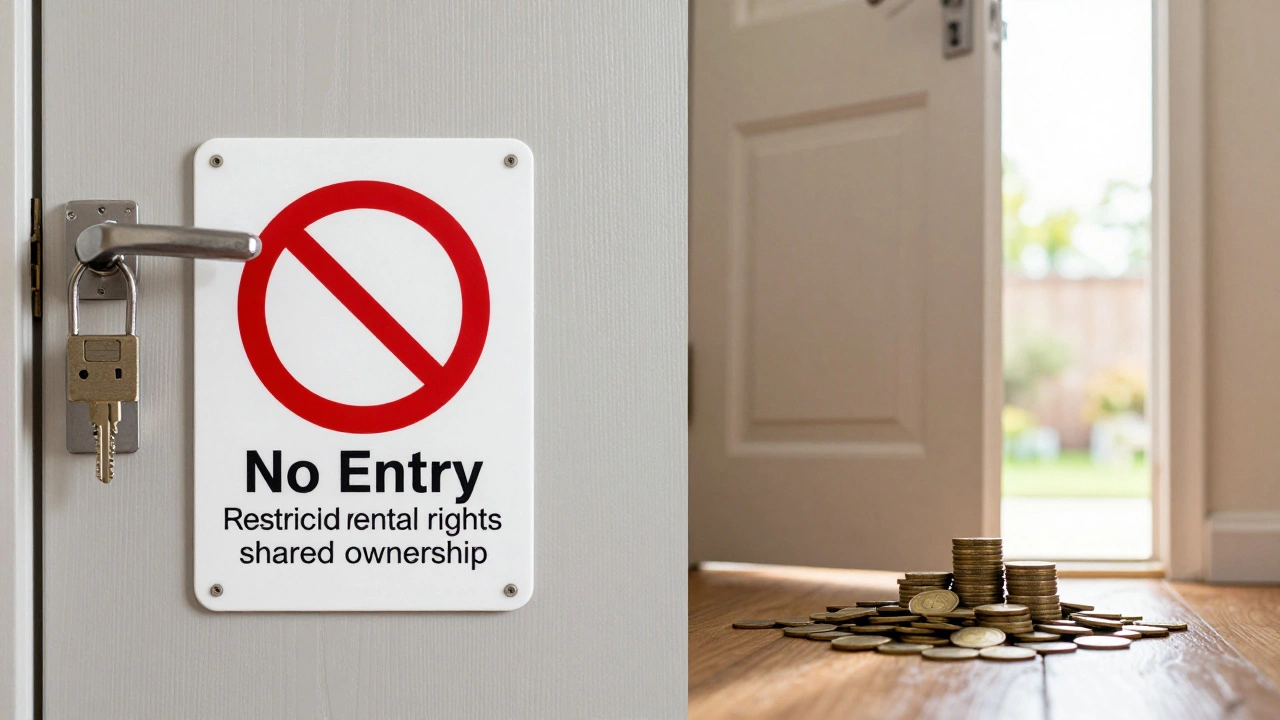
In most cases, you cannot just move out and let the property sit empty while you collect rent from a stranger. The lease agreement almost certainly prohibits subletting without permission. And even if you get permission, the rules are tight.
- No Profit Motive: Housing associations want homes for owner-occupiers who need help getting on the ladder. They do not want landlords using their stock to build wealth.
- Rent on the Unowned Share: You still have to pay rent to the housing association on the part you don't own. This is a fixed cost that eats into any potential rental income.
- Mortgage Restrictions: Many lenders will not give you a buy-to-let mortgage on a shared ownership property. You might need a residential mortgage, which requires you to live there.
So, if you can't rent it out freely, how does anyone make an investment here?
The Only Legal Way: Staircasing and Equity Growth
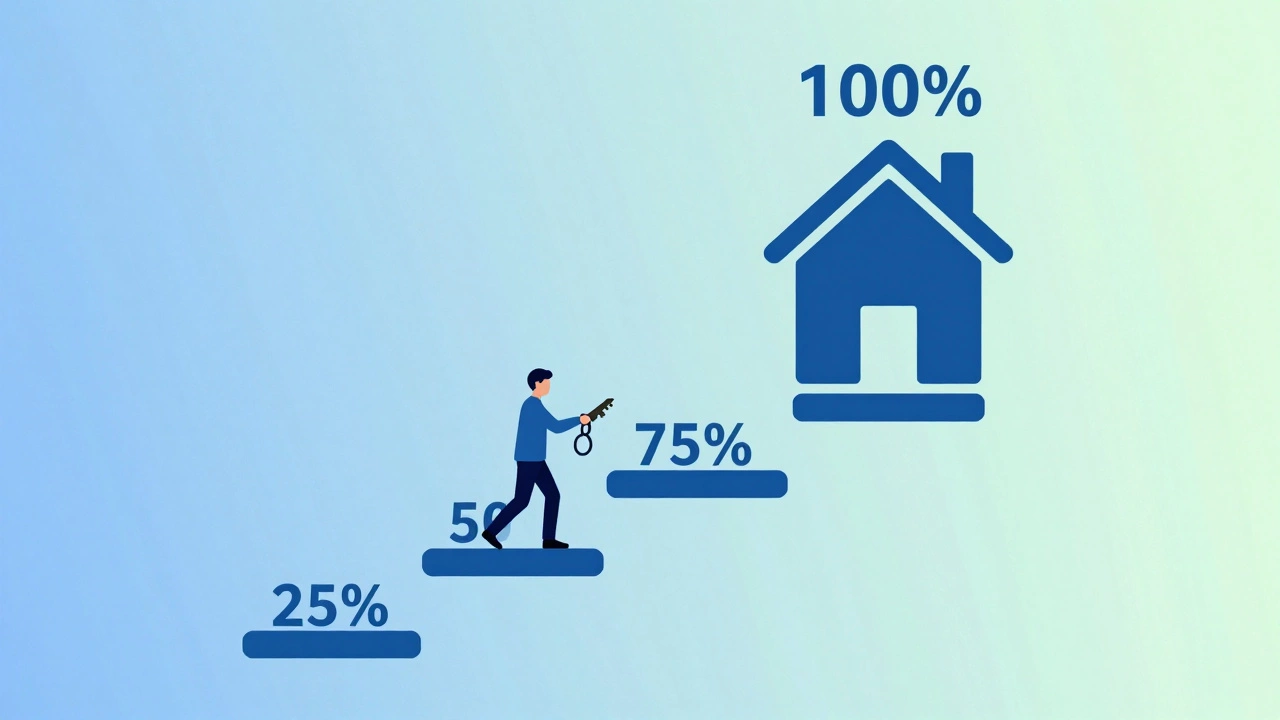
The real "income" in shared ownership comes from equity growth, not rent. This is a long-term play. You buy a share, say 25%. Over time, you "staircase"-buy more shares until you own 100%.
Imagine you buy a 25% share of a £300,000 home for £75,000. Five years later, the market value rises to £350,000. Your 25% share is now worth £87,500. You've made £12,500 in paper profit. If you sell your share back to the housing association or find a new eligible buyer, that capital gain is your return.
This is not daily income. It is periodic capital release. For many first-time buyers, this is enough. For an investor seeking cash flow, it is frustratingly slow.
Can You Rent Out Shared Ownership? The Exceptions
There are rare scenarios where renting out a shared ownership property is allowed. These are not loopholes; they are specific provisions for life changes.
- Temporary Hardship: If you lose your job or face medical issues, some housing associations allow short-term lets (usually up to 6-12 months) so you can keep the asset while you recover.
- Staircasing to 100%: Once you own 100% of the property, you are no longer in the shared ownership scheme. You are a full owner. At this point, you can treat it like any other buy-to-let property. You can rent it out, get a buy-to-let mortgage, and chase that daily/monthly income.
This second option is the key. If your goal is investment, your strategy should be:
- Buy a small share in a high-growth area.
- Live there (to satisfy mortgage terms).
- Staircase aggressively to 100% ownership.
- Sell or convert to a rental once fully owned.
This takes years. It requires patience. It is not a quick flip.
Comparison: Shared Ownership vs. Traditional Buy-to-Let
| Feature | Shared Ownership (Partial) | Traditional Buy-to-Let |
|---|---|---|
| Cash Flow | Negative or Neutral (Rent + Mortgage) | Positive (if priced correctly) |
| Entry Cost | Low (5-10% deposit on share) | High (15-25% deposit on full price) |
| Subletting Rights | Restricted/Banned | Allowed |
| Growth Potential | Tied to local market | Tied to local market |
| Liquidity | Low (Hard to find eligible buyers) | Medium/High |
As you can see, shared ownership fails the "daily income" test on almost every metric except entry cost. You get in cheaper, but you stay locked in tighter.
Hidden Costs That Kill Your Returns
If you are calculating returns based on purchase price alone, you are missing half the story. Shared ownership has unique friction costs.
- Service Charges: These are often higher than in private developments because the housing association includes management fees.
- Ground Rent: You pay this on the unowned portion. It can increase over time.
- Valuation Fees: Every time you staircase or sell, you need a professional valuation. These cost hundreds of pounds each time.
- Legal Fees: Transferring shares involves complex legal work.
These costs do not happen daily. They happen periodically. But they drag down your annualized return significantly. A traditional landlord pays for repairs and void periods. A shared ownership owner pays for bureaucracy.
Who Should Actually Consider This?
If you are a seasoned investor with £100,000 to deploy, shared ownership is likely a waste of your time. You can buy a smaller freehold property outright, rent it out, and get immediate cash flow. The restrictions of shared ownership are not worth the lower entry price for someone who needs income.
However, if you are a young professional or a family with limited savings, shared ownership is a brilliant tool for wealth building, not income generation. You use it to get onto the ladder. You benefit from leverage (the bank lends you money on a small deposit). You ride the market up. Then, after 5-10 years, you sell or staircase to 100% and then become a landlord.
This is a two-phase strategy:
- Phase 1 (Accumulation): Use shared ownership to build equity and credit history. Live in the property. Do not expect income.
- Phase 2 (Distribution): Once you own 100%, refinance into a buy-to-let mortgage. Move out. Rent it out. Now you have daily/monthly income.
Alternatives for True Daily/Monthly Income
If you need cash flow starting next month, look elsewhere. Here are three options that actually deliver regular payments:
- High-Yield Savings Accounts: Safe, liquid, pays interest monthly. Returns are low (3-5%), but the income is guaranteed and daily-accessible.
- Dividend Stocks: Companies like utilities or consumer staples pay quarterly dividends. Some reinvest automatically. This is true passive income.
- REITs (Real Estate Investment Trusts): These are companies that own commercial real estate. You buy shares. They pay out 90% of taxable income as dividends. This gives you real estate exposure with liquidity and regular payouts.
For most people seeking "daily income," REITs are the closest thing to owning property without the headache of tenants, repairs, and housing association rules.
Final Thoughts on the Strategy
Don't force a square peg into a round hole. Shared ownership is a social housing mechanism, not an investment fund. It exists to help people live in homes they couldn't otherwise afford. Trying to game the system for rental income will likely leave you stuck with a property you can't sell, can't rent, and can't easily exit.
Use it for what it is: a stepping stone. Build equity. Gain experience. Then transition to a true investment property when you have the capital and the freedom to manage it. That is the only path to sustainable, stress-free income from real estate.
Can I rent out my shared ownership home immediately?
In most cases, no. Subletting is strictly prohibited by the majority of housing associations unless you have exceptional circumstances like temporary hardship. Always check your specific lease agreement before assuming you can rent it out.
What happens if I want to sell my shared ownership share?
You must offer the housing association the first right to buy your share back. If they decline, you can find a buyer, but they must also qualify for shared ownership. This limits your pool of potential buyers and can make selling slower than with a standard property.
Is shared ownership good for retirement income?
Not directly. Because you cannot easily rent it out, it does not provide cash flow. However, if you staircase to 100% ownership before retiring, you can then sell the property or convert it to a rental to generate pension income.
How much deposit do I need for shared ownership?
Typically, you need a 5% deposit on the share you are buying, not the full property value. For example, if you buy a 25% share of a £200,000 home (£50,000), you only need a £2,500 deposit. This makes it accessible but remember you still pay rent on the remaining 75%.
Can I get a buy-to-let mortgage on shared ownership?
Generally, no. Lenders require you to occupy the property as your main residence. Buy-to-let mortgages are only available once you own 100% of the property and have exited the shared ownership scheme entirely.
Corbin Fairweather
I am an expert in real estate focusing on property sales and rentals. I enjoy writing about the latest trends in the real estate market and sharing insights on how to make successful property investments. My passion lies in helping clients find their dream homes and navigating the complexities of real estate transactions. In my free time, I enjoy hiking and capturing the beauty of landscapes through photography.
view all postsWrite a comment