

Home Affordability Calculator
You’ve crunched the numbers on your budget. You know you can comfortably afford a $1,500 monthly mortgage payment. But what does that actually buy you in today’s market? It’s not just about dividing that number by twelve and multiplying it by thirty years. The real answer depends heavily on interest rates, your down payment, and where you live.
In 2026, with interest rates stabilizing after the volatile years of 2023-2024, a $1,500 monthly payment is a realistic target for many first-time buyers. However, the purchase price you can reach varies wildly depending on whether you are putting 3%, 10%, or 20% down. Let’s break down exactly how much house money you have in your pocket.
The Math Behind Your Buying Power
To figure out the home price, we need to reverse-engineer the loan amount. Lenders look at your ability to pay, but they also factor in interest rates and loan terms. As of mid-2026, average fixed mortgage rates for a 30-year loan hover around 6.5% to 7.0%. Let’s use a conservative 6.8% rate for our calculations to give you a safe estimate.
| Down Payment % | Loan Amount | Down Payment Cash Needed | Total Home Price |
|---|---|---|---|
| 3% | $249,000 | $7,470 | $256,470 |
| 5% | $249,000 | $12,450 | $261,450 |
| 10% | $249,000 | $24,900 | $273,900 |
| 20% | $249,000 | $49,800 | $298,800 |
Notice something important here: the loan amount stays roughly the same ($249,000) because that is what a $1,500 payment can service at this interest rate. The difference lies in how much cash you need upfront. If you only have $7,500 saved, you’re looking at a home priced around $256,000. If you have $50,000 saved, you can stretch your buying power to nearly $300,000 without increasing your monthly bill.
Interest Rates Are the Silent Killer
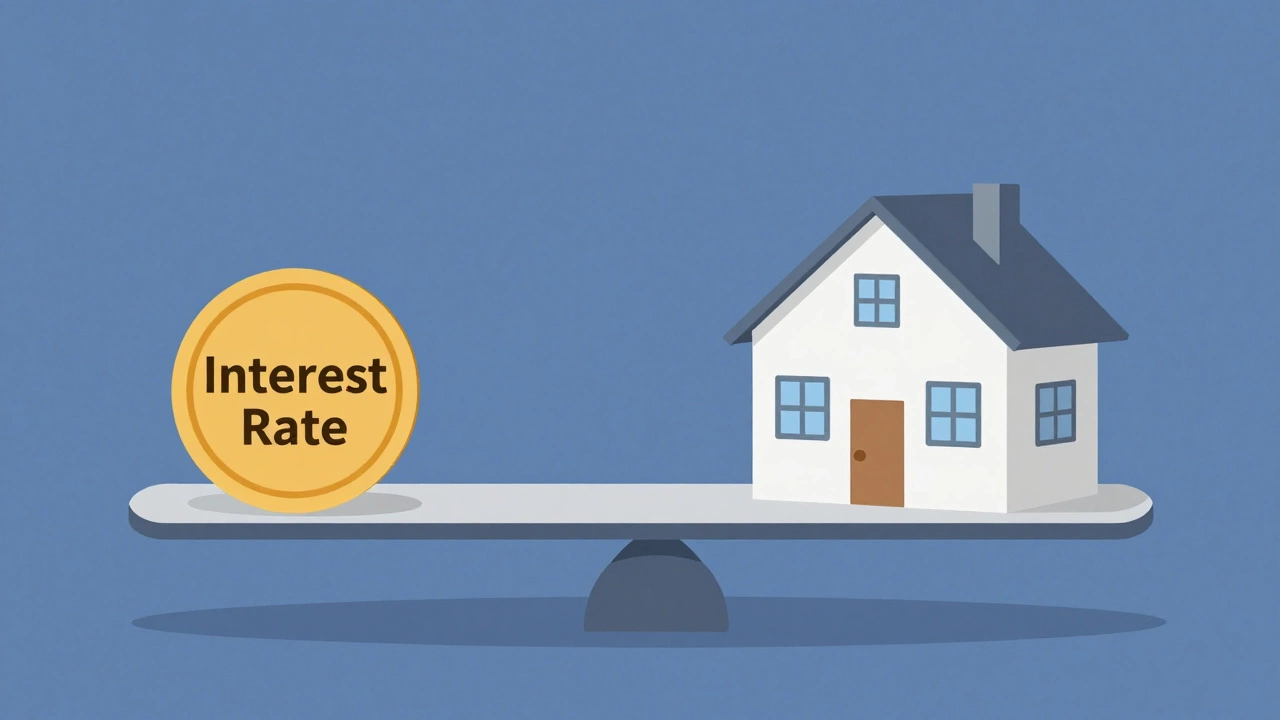
Why did I choose 6.8%? Because rates fluctuate. If rates drop to 6.0%, that same $1,500 payment could support a larger loan-roughly $275,000. Conversely, if rates spike to 7.5%, your loan capacity shrinks to about $235,000. This sensitivity means that locking in a rate matters more than ever.
Many first-time buyers make the mistake of focusing solely on the principal balance. They forget that interest is the cost of borrowing. Over a 30-year term, even a 0.5% difference in rate can add tens of thousands of dollars to the total cost of the home. When you are working with a strict monthly cap like $1,500, every basis point counts toward how much equity you build versus how much you pay the bank.
The Hidden Costs Beyond the Mortgage
Your $1,500 limit shouldn’t just cover the principal and interest. Most lenders use a "Debt-to-Income" (DTI) ratio to approve loans, typically capping housing expenses at 28% of your gross monthly income. But your actual monthly outflow includes more than just the loan payment.
- Property Taxes: These vary by location but can range from 0.5% to 2.5% of the home’s value annually. On a $260,000 home, that’s $1,300 to $6,500 a year, or roughly $100 to $540 a month.
- Homeowners Insurance: Expect to pay between $100 and $200 a month depending on your region and coverage needs.
- Private Mortgage Insurance (PMI): If you put down less than 20%, you’ll likely pay PMI. For a $250,000 loan with a 3% down payment, PMI might cost an additional $150-$200 per month.
- HOA Fees: If you buy a condo or a townhouse in a managed community, HOA fees can eat up $200 to $500 of your budget instantly.
If your $1,500 budget is strictly for the mortgage principal and interest, you need extra cash flow for these other costs. If your $1,500 is your *total* housing budget, you need to subtract taxes, insurance, and PMI first. Let’s say those ancillary costs total $400/month. That leaves you with only $1,100 for principal and interest. At 6.8%, that drops your loan capacity to around $185,000. Suddenly, that $260,000 home looks out of reach.
Location Matters: Where Does $1,500 Go?
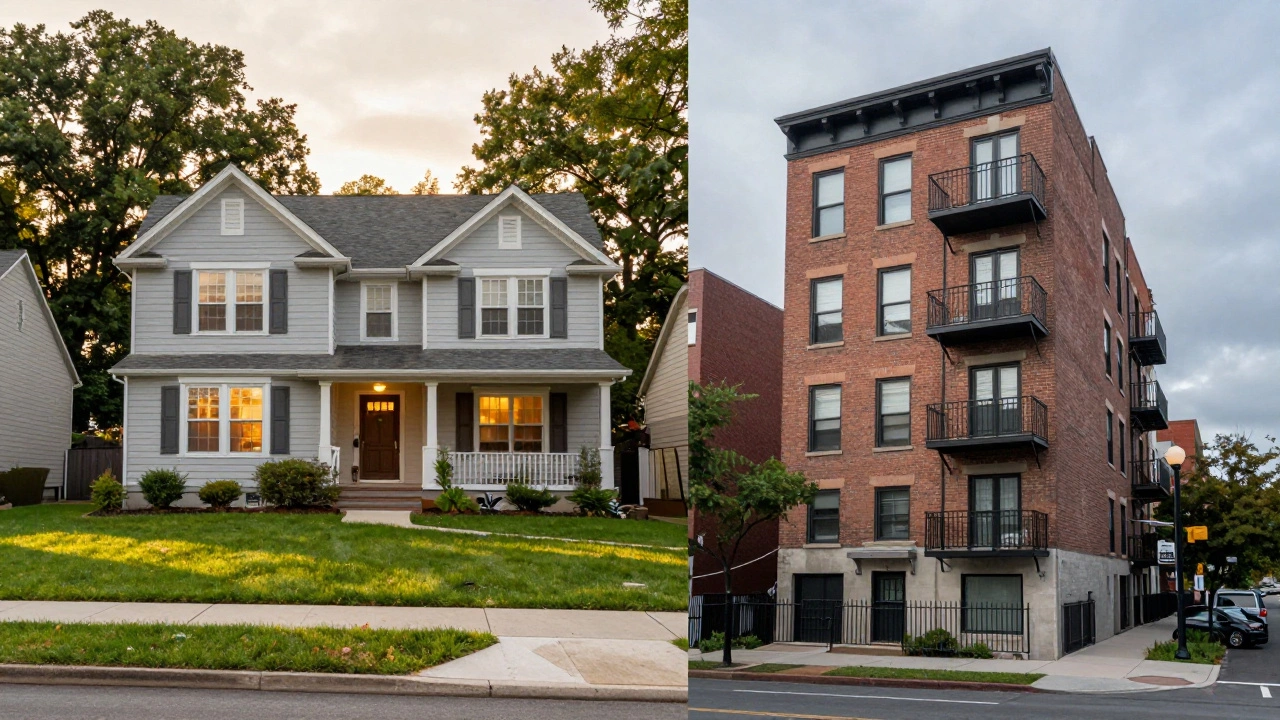
Affordability is relative. A $260,000 home in rural Ohio is a spacious four-bedroom ranch. In San Francisco or New York City, that same price might get you a studio apartment or nothing at all. Understanding local market dynamics is crucial for first-time buyers.
In high-cost areas, you may need to look at alternative options like shared ownership schemes or smaller condos. In lower-cost regions, your $1,500 payment might allow you to buy a fixer-upper with significant potential. Always research the median home price in your target zip code. If the median is $400,000, you will be competing for homes well below market average, which often means older properties or those needing repairs.
Strategies to Maximize Your Budget
If the math shows you can only afford a $250,000 home but you want more space or a better location, consider these strategies:
- Increase Your Down Payment: Saving an extra $10,000 allows you to buy a more expensive home while keeping the loan amount (and thus the monthly payment) the same.
- Consider a 15-Year Loan: While monthly payments are higher, you build equity faster. However, this usually exceeds a $1,500 budget unless the home price is significantly lower.
- Look for First-Time Buyer Grants: Many states and local governments offer down payment assistance programs that can reduce the cash you need upfront, effectively lowering your required loan size.
- Refinance Later: If rates drop in the future, you can refinance to lower your monthly payment or shorten the loan term, freeing up cash flow over time.
FAQ
Can I afford a $300,000 house with a $1,500 monthly payment?
Only if you make a substantial down payment. To keep your principal and interest payment under $1,500 at current rates, you would need to borrow no more than ~$250,000. This means you’d need to put down at least $50,000 (16-17%) on a $300,000 home. Additionally, you must ensure you have separate funds for taxes, insurance, and potential PMI.
What is a good salary to afford a $1,500 mortgage?
Lenders typically require your housing expense to be no more than 28% of your gross monthly income. Working backward, $1,500 divided by 0.28 equals approximately $5,357 in gross monthly income. This translates to an annual salary of about $64,000. However, this assumes you have no other significant debts. If you have student loans or car payments, you’ll need a higher income to stay within the recommended 36% total debt-to-income ratio.
Does the $1,500 include property taxes and insurance?
It depends on how you define your budget. Most lenders calculate your "debt-to-income" ratio based on PITI (Principal, Interest, Taxes, and Insurance). If your $1,500 limit includes taxes and insurance, your actual loan payment will be lower, meaning you can afford a cheaper home. If $1,500 is just for principal and interest, you need extra cash flow for the other costs.
How does interest rate affect my buying power?
Interest rates have a direct impact. Higher rates mean more of your $1,500 goes toward interest rather than paying down the principal. For example, at 5% interest, a $1,500 payment supports a ~$280,000 loan. At 7.5% interest, that same payment only supports a ~$235,000 loan. A 2.5% rate difference reduces your purchasing power by over $45,000.
What happens if I put less than 20% down?
You will likely have to pay Private Mortgage Insurance (PMI). PMI protects the lender if you default on the loan. It typically costs 0.5% to 1% of the loan amount annually. On a $250,000 loan, this could add $100-$200 to your monthly payment. This reduces the amount of your $1,500 budget available for principal and interest, effectively lowering the home price you can afford.
Corbin Fairweather
I am an expert in real estate focusing on property sales and rentals. I enjoy writing about the latest trends in the real estate market and sharing insights on how to make successful property investments. My passion lies in helping clients find their dream homes and navigating the complexities of real estate transactions. In my free time, I enjoy hiking and capturing the beauty of landscapes through photography.
view all postsWrite a comment