
NC Down Payment & Closing Cost Estimator
Home Details
Your Assistance Profile
Analysis & Forgiveness Estimate
- Program Benefit:
- Forgiveness Status:
- Early Sale Repayment (if applicable):
You’ve looked at listings, talked to agents, and maybe even pre-approved for a loan. But then you hit that wall: the down payment. For many first-time home buyers in North Carolina, saving up 3% to 20% of a home’s price feels like climbing a mountain without gear. That’s where the concept of a “down payment grant” comes in. It sounds too good to be true-free money to buy a house-but it’s real, and it’s one of the most powerful tools available if you know how to use it.
There isn’t just one single “NC Down Payment Grant.” Instead, there is a network of programs managed by different entities that provide gift funds or forgivable loans to cover closing costs and down payments. Understanding which program fits your situation is the difference between renting forever and owning your first home next year.
The Quick Reality Check: Grants vs. Loans
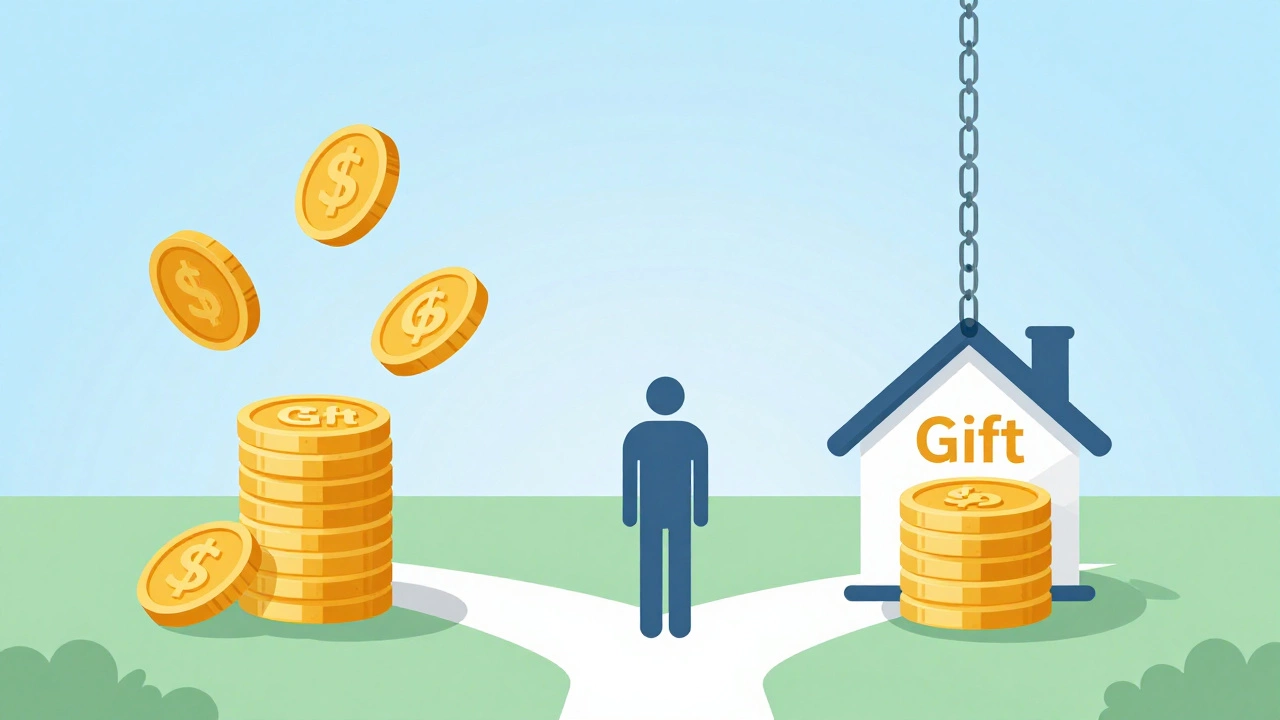
Before we dig into the specific programs, let’s clear up a common confusion. Most people think a “grant” means cash handed to them with zero strings attached. In the world of government housing assistance, it’s rarely that simple. You will usually encounter two types of financial aid:
- Genuine Grants (Gift Funds): Money you do not have to pay back. These are often limited to covering closing costs, title insurance, and prepaid items rather than the full down payment.
- Forgivable Loans (Second Mortgages): This is what most people call a “grant.” You borrow money for your down payment, but if you stay in the home for a set period (usually 5 to 10 years), the debt is forgiven. If you sell or refinance before that time, you repay it.
Knowing this distinction helps you plan. If you plan to move in three years, a forgivable loan might cost you more in the long run than a small conventional loan with private mortgage insurance (PMI).
The Big Player: NC Housing Finance Agency (NCHFA)
If you are looking for down payment assistance in North Carolina, the NC Housing Finance Agency (NCHFA) is the central hub. They don’t just lend money; they manage several distinct programs that can stack together.
The most popular option is the Down Payment Assistance Program (DPAP). Here is how it works in practice:
- The Loan: NCHFA offers a second mortgage to cover up to 3.5% of the purchase price for your down payment and closing costs.
- The Forgiveness: This is a deferred-payment loan. You make no monthly payments on this second loan as long as you keep your primary NCHFA mortgage.
- The Catch: If you sell, refinance, or move out before five years, you must repay the outstanding balance. However, the repayment amount is often prorated based on how long you lived there.
For example, if you get a $10,000 DPAP loan and sell the house after two and a half years, you might only owe half of that amount. This makes it incredibly flexible for younger buyers who aren’t sure how long they’ll stay in one place.
Other Key Programs to Consider
NCHFA isn’t the only game in town. Depending on your income, location, and profession, other entities might offer better terms.
| Program Name | Type of Aid | Key Benefit | Best For |
|---|---|---|---|
| NCHFA DPAP | Forgivable Second Mortgage | Covers up to 3.5% of purchase price | General first-time buyers |
| USDA Guaranteed Loan | Zero Down Payment | No down payment required at all | Rural and suburban buyers |
| VA IRRRB Grant | Closing Cost Gift | Covers funding fees and closing costs | Veterans and active duty military |
| FHA 203(k) Repair | Renovation Loan | Bundles purchase and repairs | Buyers of fixer-uppers |
Who Qualifies? The Income Test
These programs are designed for middle-income earners, not just low-income households. NCHFA uses area median income (AMI) limits to determine eligibility. As of recent updates, these limits vary by county. Urban counties like Mecklenburg (Charlotte) or Wake (Raleigh) have higher caps than rural counties.
Generally, you must earn less than 120% to 140% of the AMI for your household size. For a family of four in Charlotte, this could mean an annual income cap around $130,000-$150,000. If you earn too much, you won’t qualify for the grant, but you might still qualify for a standard conventional loan. It’s worth checking the current charts on the NCHFA website because they adjust annually.
Stacking Your Benefits
Here is a pro tip that many buyers miss: you can often “stack” programs. This means using two sources of assistance to cover different parts of your upfront costs.
Imagine you want to buy a $250,000 home. You need a 3% down payment ($7,500) plus about $8,000 in closing costs. Total cash needed: $15,500.
- Step 1: Use the NCHFA DPAP to cover the entire $15,500 as a forgivable loan.
- Step 2: Alternatively, use a local non-profit grant (like those from Habitat for Humanity affiliates) to cover the $8,000 in closing costs as a true gift.
- Step 3: Use the NCHFA DPAP only for the $7,500 down payment.
By splitting the sources, you reduce the amount of debt you might have to repay if you sell early. Always ask your lender if stacking is allowed for your specific loan product.

The Application Process: Step-by-Step
Getting the money isn’t automatic. You don’t apply for the grant directly; you apply through a participating lender. Here is the workflow:
- Find a Participating Lender: Not every bank knows how to process NCHFA loans. Look for lenders listed on the NCHFA website who are experienced with these programs.
- Get Pre-Approved: Submit your tax returns, pay stubs, and bank statements. The lender will calculate your debt-to-income ratio (DTI). NCHFA allows DTIs up to 50%, which is higher than conventional loans.
- Complete Homebuyer Education: Many grants require you to take a free or low-cost homebuyer education course. This ensures you understand budgeting and maintenance.
- Submit the Loan Application: Once you find a home, your lender submits the package to NCHFA for approval.
- Closing: At the table, the grant funds are disbursed directly to the title company to pay off the seller and cover fees. You never see the cash.
Pitfalls to Avoid
I’ve seen deals fall apart because buyers didn’t read the fine print. Here are three common traps:
1. Buying a Non-Qualifying Property
Not every house qualifies. The property must pass a strict appraisal and inspection. If it needs major repairs (like a new roof or foundation work), NCHFA may reject the loan unless you use a renovation loan product.
2. Ignoring the Resale Clause
If you plan to flip the house or rent it out immediately, these grants are not for you. The forgiveness clause is tied to owner-occupancy. If you move out within the forgiveness period, the clock stops, and you owe the balance.
3. Overestimating Closing Costs
Grants often have maximum dollar amounts. If your closing costs exceed the grant limit, you still need to bring the difference to the table in cash. Make sure your lender provides a detailed Good Faith Estimate early in the process.
Alternatives If You Don’t Qualify
If your income is too high or your credit score is too low for NCHFA programs, you aren’t out of luck. Consider these alternatives:
- Conventional 95 Loans: Require only 5% down. No government grant, but lower PMI rates than older conventional loans.
- Employer Assistance: Some large employers in NC (like banks or healthcare systems) offer down payment assistance to employees buying homes near their workplace.
- Family Gifts: Lenders accept gifted funds from relatives. You just need a letter stating it’s a gift and proof of the donor’s ability to give the money.
Do I have to pay back the NC down payment grant?
It depends on the specific program. True grants (gift funds) do not need to be repaid. However, most major programs like the NCHFA DPAP are forgivable loans. You do not make monthly payments, but if you sell or refinance before the forgiveness period ends (usually 5 years), you must repay the remaining balance.
How much income can I make to qualify for the grant?
Income limits vary by county and household size. Generally, you must earn below 120% to 140% of the Area Median Income (AMI). For a family of four in urban areas like Charlotte or Raleigh, this cap is often between $130,000 and $160,000 annually. Rural areas have lower caps.
Can I use the grant for any house in North Carolina?
No. The home must meet specific guidelines. It must be your primary residence, pass a standard appraisal, and be in good condition. Condos may have restrictions depending on whether the HOA is approved by Fannie Mae or Freddie Mac.
Does the grant cover the entire down payment?
Most programs cover a percentage, typically up to 3.5% of the purchase price. This covers both the down payment and closing costs. If your total upfront costs exceed this amount, you will need to provide the difference in cash.
How long does it take to get approved for the grant?
The process adds a few weeks to standard closing times. Expect the underwriting and approval phase with NCHFA to take 2 to 4 weeks after your initial application. Start the process early to avoid delays.
Corbin Fairweather
I am an expert in real estate focusing on property sales and rentals. I enjoy writing about the latest trends in the real estate market and sharing insights on how to make successful property investments. My passion lies in helping clients find their dream homes and navigating the complexities of real estate transactions. In my free time, I enjoy hiking and capturing the beauty of landscapes through photography.
view all postsWrite a comment