
Share House Cost Calculator
Buying a home feels impossible for many people in New Zealand today. Prices have shot up, wages haven’t kept pace, and saving for a 20% deposit? That’s a decade-long project for most. But there’s another way - one that’s growing fast in cities like Auckland, Wellington, and Christchurch: share houses. Not the kind with five roommates sharing a bathroom. This is about shared ownership - where you buy part of a home with others, and live in it as your own.
What exactly is a share house?
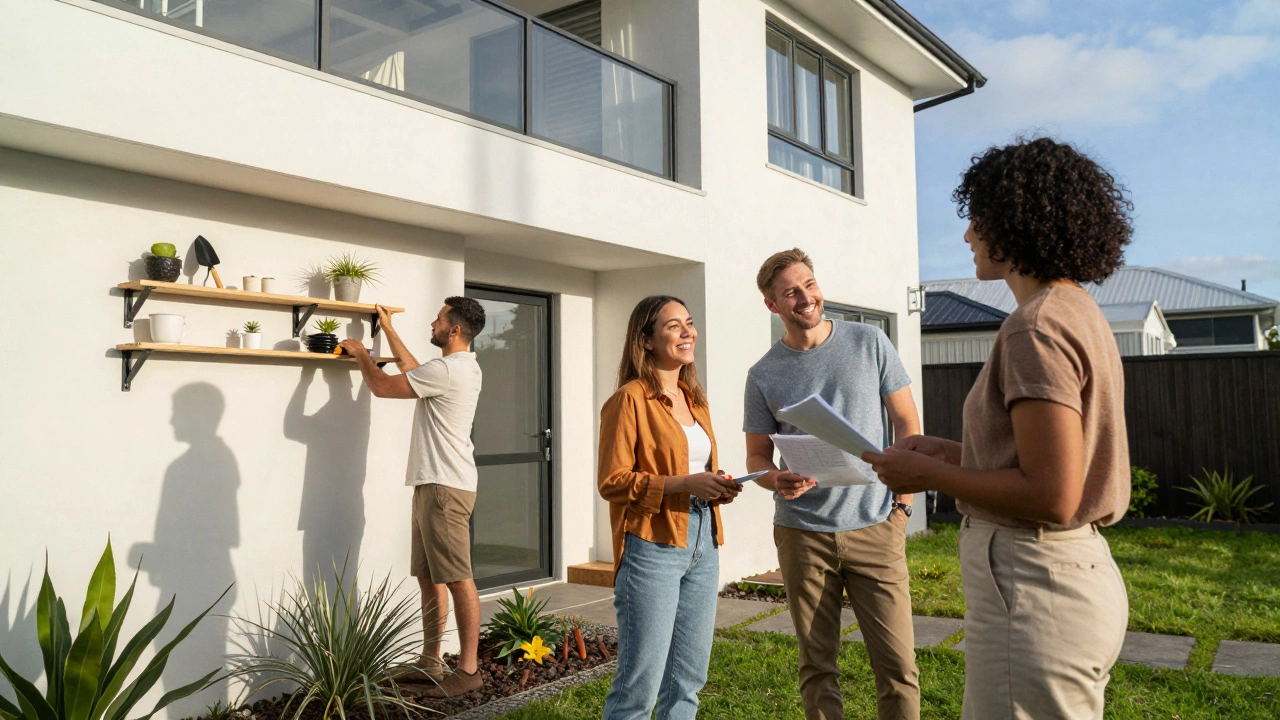
A share house in this context isn’t a rental. It’s a legal arrangement where two or more people jointly own a property. Each person buys a percentage - say, 25%, 50%, or 75% - of the home. The rest is owned by a housing provider, like a nonprofit trust or a government-backed scheme. You pay a mortgage on your share, and rent on the part you don’t own. You get to live there full-time. You can renovate, paint walls, put up shelves. It’s your home. But you don’t own it all.
This model started in the UK and has been slowly spreading to New Zealand since 2020. The goal? Make homeownership possible for people earning between $60,000 and $100,000 a year - people who are too rich for state housing but too broke for the open market.
How does it actually work?
Here’s the step-by-step breakdown:
- You apply through a registered shared ownership provider - in NZ, that’s usually Housing New Zealand a government-owned entity that manages public and shared ownership housing or one of the community trusts like Te Puni Kōkiri a Māori housing initiative that partners with local iwi to create shared ownership homes.
- You get assessed. They check your income, savings, credit, and whether you’ve ever owned property before. Most schemes require you to be a first-time buyer.
- You choose a property. These are usually new builds or renovated homes in suburbs with good access to transport, schools, and services. You don’t pick any house - only ones approved by the scheme.
- You buy your share. Most people start with 25% to 50%. The rest is owned by the provider. You take out a mortgage just for your share. For example, if the house is $700,000 and you buy 40%, your mortgage is $280,000.
- You pay rent on the rest. If you own 40%, you pay rent on the other 60%. That rent is usually lower than market rates - often 30-40% less than renting a similar place privately.
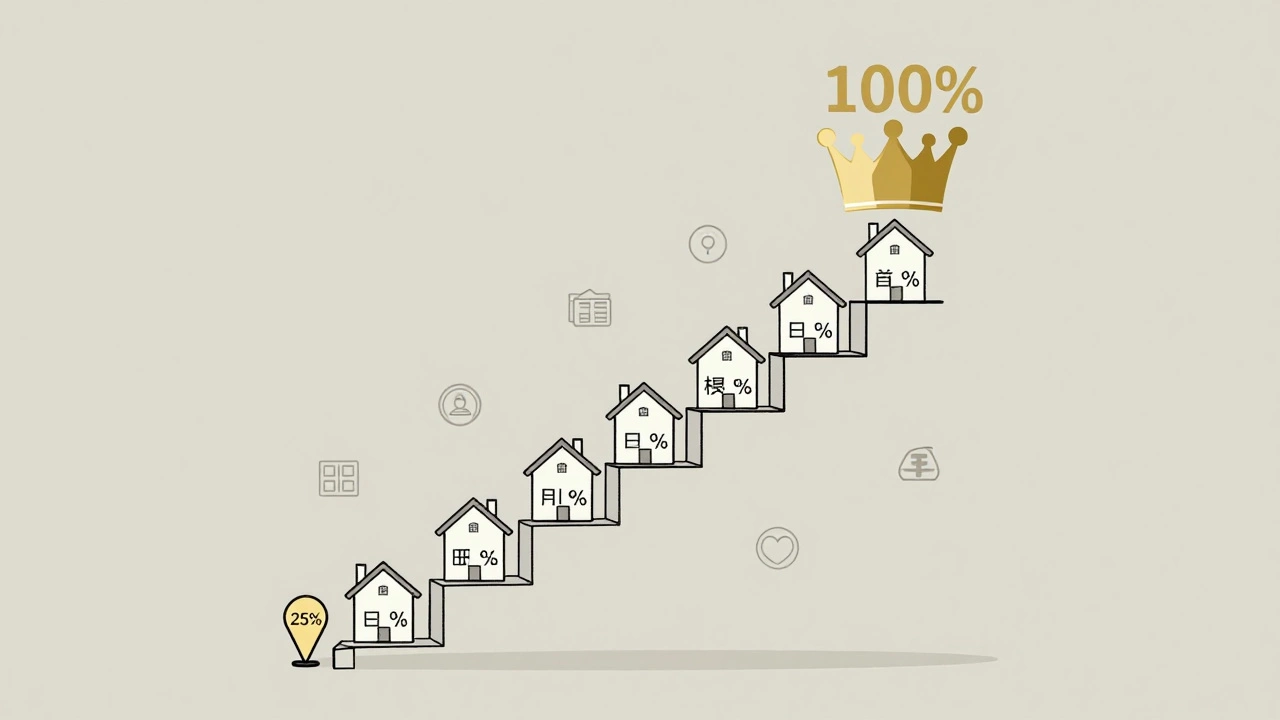
- You can increase your share later. This is called staircasing. After a year or two, if your income goes up or you save more, you can buy more of the property. You can go from 40% to 60%, then 80%, then 100%. There’s no rush. You can stop at any point.
When you sell, you only get back the value of your share. If you bought 50% of a $700,000 home and it’s now worth $800,000, you get $400,000. You don’t get the full $800,000. But you also didn’t pay $800,000 upfront. That’s the trade-off.
Who can join a share house?
It’s not for everyone. Here’s who it works best for:
- First-time buyers - if you’ve never owned a home, you’re eligible.
- People with stable income - you need to prove you can pay both mortgage and rent long-term. A job in healthcare, teaching, or public service helps.
- Those with savings - you still need a deposit. Usually 5-10% of your share. So if you’re buying 50% of a $700,000 home, you need $17,500-$35,000 saved.
- People who want stability - you’re not renting month-to-month. You have security. You can stay as long as you want.
It’s not for people who plan to move every few years. It’s also not for those who want to flip homes. This is about building a life, not making a profit.
What are the downsides?
It sounds perfect - but there are catches.
- You can’t sell freely. If you want out, you have to sell your share back to the provider. They’ll find the next buyer. You don’t get to list it on Trade Me.
- Renovations are limited. You can paint and install shelves, but you can’t knock down walls or add extensions without approval.
- Interest rates still matter. Your mortgage rate applies to your share. If rates rise, your payments go up.
- There’s a waiting list. In Auckland, the wait can be 12-18 months. You need patience.
And yes - you still have to pay rates, insurance, and body corporate fees if it’s a unit or apartment. These are usually split between owners and the provider.

Real example: Sarah’s story
Sarah, 32, works as a nurse in Ōtāhuhu. She made $85,000 a year but couldn’t save enough to buy anywhere near Auckland. In 2024, she joined a shared ownership scheme through Housing New Zealand. She bought 50% of a new 3-bedroom home in Papatoetoe priced at $680,000. Her deposit: $17,000. Her mortgage: $340,000. Her rent on the other half: $480 a month.
Before, she was paying $650 a month in rent. Now she’s paying $1,150 total - mortgage + rent. But she’s building equity. She owns half a home. And next year, she plans to buy another 10%. In five years, she could own 80%. She won’t need a 20% deposit again.
Is this better than renting?
Let’s compare. Renting $650 a month in Auckland? You get nothing back. Your money disappears. In a share house, part of your payment goes toward owning something. Even if you only own 25%, you’re still building wealth.
And unlike renting, you can fix things. You can hang pictures. You can plant a garden. You can have pets. You’re not living in someone else’s property.
How is this different from buying with friends?
Some people try to buy with friends - two or three people pooling savings to buy a house together. That’s risky. If one person loses their job, or breaks up with their partner, or wants to move, things get messy. Legally, you’re all on the same mortgage. If one person defaults, the whole thing can collapse.
Shared ownership schemes protect you. The provider is the other owner. They’re not a friend. They’re a professional body with clear rules. If you need to leave, they handle the sale. No drama. No lawsuits.
Where can you find these homes?
Most shared ownership homes are in:
- Auckland - especially South Auckland, Manukau, and Papakura
- Wellington - Miramar, Lower Hutt, Porirua
- Christchurch - Hornby, Halswell, Wigram
New builds are preferred because they’re more energy efficient and come with warranties. Older homes are sometimes included if they’ve been upgraded to meet modern standards.
You can’t just walk into a real estate office and ask for one. You have to apply through the official providers. Check Housing New Zealand’s website or contact your local Community Housing Trust.
Can you eventually own 100%?
Yes. That’s the whole point. Staircasing is built into the system. Most schemes allow you to buy up to 100%. Once you do, you own the home outright. No rent. No provider. Just you and your mortgage paid off.
Some people choose to stop at 75% or 80%. Why? Because the rent they’re paying on the remaining 20% is so low - often $200-$300 a month - that it’s cheaper than paying full mortgage on the whole house. It’s smart financial planning.
What’s next?
Shared ownership is still small in New Zealand. Only about 800 homes are in this system. But the government is pushing to build 5,000 more by 2030. It’s one of the few housing solutions that actually works for middle-income earners.
If you’re tired of renting, tired of watching prices climb, and tired of feeling like homeownership is out of reach - this isn’t magic. But it’s real. And it’s here.
Can I buy a share house if I’ve owned a home before?
Most schemes are for first-time buyers only. If you’ve owned a home in the past - even a small one - you’re usually not eligible. There are rare exceptions for people who lost their home due to divorce, job loss, or natural disaster. But those are assessed case by case.
Can I get a mortgage for a share house?
Yes. Most major banks in New Zealand - ANZ, ASB, BNZ, and Westpac - offer mortgages for shared ownership homes. You apply for a mortgage on your share only. The lender will still check your income, credit score, and deposit. But because you’re paying rent on the rest, your total housing costs are lower, which helps you qualify.
What happens if I can’t pay my mortgage?
The provider doesn’t kick you out immediately. They work with you. If you lose your job or face hardship, you can pause payments for a few months. But if you fall too far behind, they can sell your share to recover the debt. You won’t lose your entire home - just your portion. The provider will find a new buyer, and you’ll move out.
Do I have to live in the share house full-time?
Yes. These homes are for owner-occupiers only. You can’t rent out your share. You can’t use it as an investment property. You must live there as your main residence. This prevents speculation and keeps the system fair.
Can I add someone to the ownership later?
You can’t just add a partner or friend to the title. But if you get married or enter a long-term relationship, you can apply to transfer part of your share to them. The provider will review your new household income and decide if they qualify. It’s not automatic.
Corbin Fairweather
I am an expert in real estate focusing on property sales and rentals. I enjoy writing about the latest trends in the real estate market and sharing insights on how to make successful property investments. My passion lies in helping clients find their dream homes and navigating the complexities of real estate transactions. In my free time, I enjoy hiking and capturing the beauty of landscapes through photography.
view all postsWrite a comment