

Property Value Estimator
This calculator provides a rough estimate based on key factors discussed in the article. Remember that professional valuations are required for mortgage applications, tax assessments, and legal purposes. Online estimates often differ by 10-30% from actual values.
Enter your property details above to see an estimate
When you hear the term property valuation, you might think it’s just a number a real estate agent throws out to get you to list your house. But it’s way more than that. Property valuation is the process of figuring out what a property is truly worth at a specific point in time. It’s not guesswork. It’s not wishful thinking. It’s a detailed, evidence-based assessment that affects mortgages, taxes, sales, and even legal disputes.
Why property valuation isn’t just about selling your home
People often think property valuation only matters when they’re putting their house on the market. But that’s only one piece of the puzzle. Banks use it to decide how much they’ll lend you for a mortgage. Local councils use it to calculate your annual property taxes. Insurance companies rely on it to set coverage amounts. If you’re going through a divorce, inheritance, or legal dispute over land, a formal valuation is often required by law.In Auckland, where house prices can swing by tens of thousands in a single quarter, an outdated or inaccurate valuation can cost you money - or block you from buying your next home. A valuation done in 2023 might say your home is worth $900,000. But if the market jumped 15% by 2025, your bank might only approve a loan based on the old number. That leaves you short on cash for your next purchase.
How property valuation actually works
A professional valuer doesn’t just walk in, glance around, and give you a number. They follow a strict process backed by data and standards. Here’s how it typically goes:- Property inspection - The valuer visits the home. They measure the floor area, note the condition of the roof, plumbing, insulation, and finishes. They check for signs of damp, structural damage, or illegal renovations.
- Comparables analysis - They look at similar properties sold nearby in the last 3-6 months. Not just any homes - ones that are the same size, same number of bedrooms, same location, and sold under similar conditions.
- Market trends review - They study local demand, interest rates, zoning changes, and upcoming infrastructure projects. A new bus route or school nearby can push values up. A planned motorway or landfill nearby can drag them down.
- Adjustments and final report - If your home has a renovated kitchen but the comparables don’t, they adjust the value upward. If your backyard is half the size of others in the area, they adjust downward. The final report includes photos, maps, and detailed reasoning.
This isn’t something you can do yourself with a website like Trade Me or REA. Those sites give estimates - sometimes wildly off. A professional valuation is legally recognized and accepted by banks, courts, and government agencies.
What drives property value?
Not everything about a home affects its value equally. Some features move the needle. Others don’t. Here’s what actually matters in a valuation:- Location - Proximity to schools, public transport, shops, and parks. In Auckland, homes within 800 meters of a train station can be worth 10-15% more than those just a block away.
- Size and layout - The number of bedrooms and bathrooms matters more than flashy finishes. A 3-bedroom home with a functional layout sells faster and for more than a 4-bedroom home with a weird, unusable room.
- Condition - A well-maintained home with updated wiring, insulation, and roofing adds value. A home with a leaky roof or outdated plumbing can lose 10-20% of its value.
- Land and zoning - A larger section or potential for subdivision (like a RZ2 zone in Auckland) can dramatically increase value. A property zoned for two dwellings might be worth twice as much as one zoned for a single home.
- View and orientation - North-facing homes with good natural light and views of the harbour or mountains often command premiums.
Things like marble countertops, smart home tech, or designer paint? They rarely add much value. Buyers might like them, but valuers don’t reward them with higher numbers. They’re personal preferences, not market drivers.
When you need a formal property valuation
You don’t always need to pay for one. But here are the times you absolutely should:- Applying for a mortgage - Banks require an independent valuation before approving your loan. They don’t trust your estimate or the agent’s.
- Divorce or separation - Courts need an unbiased, professional number to split assets fairly.
- Inheritance or estate planning
- Disputing your council’s rateable value - If you think your property tax is too high, a professional valuation can help you challenge it.
- Buying off the plans - If you’re buying a new build before it’s finished, you need a valuation to ensure you’re not overpaying.
- Refinancing or equity release - To borrow against your home’s value, you need proof of what it’s worth now.
In New Zealand, valuations for mortgage purposes must be done by a Registered Valuer - someone certified by the New Zealand Institute of Valuers. These professionals follow the International Valuation Standards and are legally accountable for their reports.
What a valuation report looks like
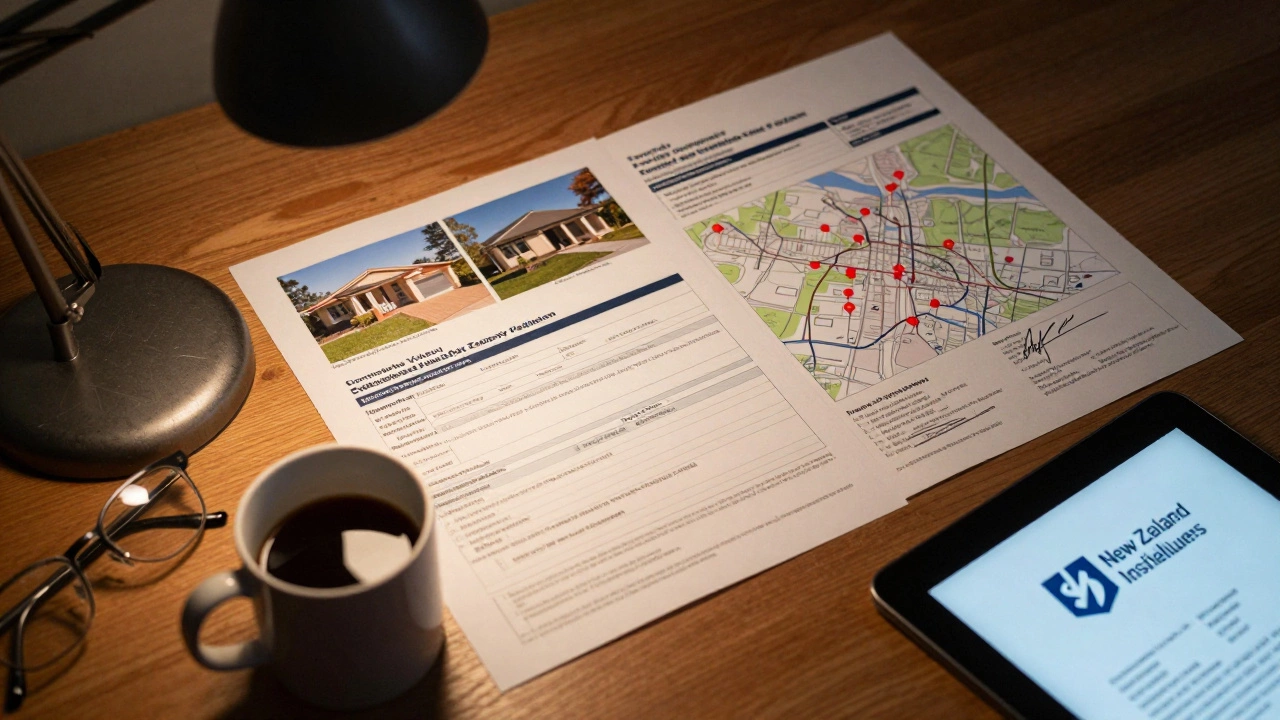
A typical valuation report includes:- Property address and legal description
- Date of inspection and date of valuation
- Photographs of the property and surrounding area
- Details of comparable sales (addresses, sale prices, days on market)
- Market analysis and trend summary
- Valuation opinion with reasoning
- Limitations and assumptions (e.g., ‘assumes no hidden structural defects’)
- Valuer’s signature and registration number
It’s not a marketing brochure. It’s a legal document. You can request a copy from your bank or solicitor if you’re involved in a transaction.
Common mistakes people make
Many homeowners misunderstand valuations. Here are the biggest errors:- Believing your agent’s opinion is a valuation - Real estate agents give market appraisals. They’re useful for pricing, but not for legal or lending purposes.
- Thinking renovations always increase value - A $50,000 kitchen renovation might only add $20,000 to your valuation if the neighborhood doesn’t support it.
- Ignoring market cycles - In a falling market, even a perfect home can lose value. Valuations reflect current conditions, not past glory.
- Using online estimates as gospel - Websites like Trade Me and Realestate.co.nz use algorithms based on limited data. They’re often off by 10-30%.
- Waiting until the last minute - Valuations take 5-10 days. If you’re buying and need finance, waiting until your offer is accepted can delay settlement.
How to get the best valuation outcome
You can’t control the market, but you can control how your property is presented:- Do a quick clean-up - Clutter hides space. Declutter before the valuer arrives.
- Fix visible issues - A dripping tap, peeling paint, or broken light switch signals neglect.
- Have documents ready - Provide copies of building consents, insulation certificates, or recent renovations.
- Be present - Answer questions honestly. Tell them about that new heat pump or the fact that the garage was converted into a home office with council approval.
- Don’t argue with the valuer - They’re not there to please you. They’re there to be objective.
A good valuer will tell you the truth, even if it’s not what you want to hear. That’s why you pay for one.
Property valuation vs. market appraisal: What’s the difference?
This trips up a lot of people.A market appraisal is what your real estate agent gives you for free. It’s based on recent sales in your street, their experience, and a quick look at your place. It’s useful for setting a listing price - but it’s not official.
A property valuation is a formal, detailed, and legally binding report. It’s done by a certified professional, follows strict standards, and is backed by data. It costs between $500 and $1,200 in New Zealand, depending on the property type and location.
Think of it this way: a market appraisal is like asking a friend for advice on your car’s value. A valuation is like taking it to a certified mechanic for a full inspection and written report.
| Feature | Property Valuation | Market Appraisal |
|---|---|---|
| Performed by | Registered Valuer (certified professional) | Real Estate Agent |
| Cost | $500-$1,200 | Free |
| Used for | Mortgages, taxes, legal disputes, insurance | Listing price guidance |
| Legal standing | Legally recognized | Opinion only |
| Time to complete | 5-10 business days | Same day |
| Detail level | High - includes photos, comps, analysis | Low - general estimate |
Frequently Asked Questions
Is property valuation the same as a home inspection?
No. A home inspection checks for physical defects - like mold, electrical faults, or termite damage. A property valuation estimates the market value. They’re often done together, but they serve different purposes. You might get an inspection before buying and a valuation when selling or refinancing.
Can I challenge a property valuation if I think it’s too low?
Yes. If you believe the valuation is inaccurate, you can ask the valuer for clarification or provide additional evidence - like recent sales of similar homes they didn’t include. If that doesn’t work, you can commission a second valuation from another Registered Valuer. Banks usually accept the higher of the two if both are valid.
How often should I get a property valuation?
You only need one when there’s a specific reason - like applying for a loan, disputing rates, or settling an estate. But if you own investment property, it’s smart to get one every 2-3 years to track changes in value. In fast-moving markets like Auckland, values can shift quickly.
Does a property valuation include the land value?
Yes. A full property valuation includes both the land and the buildings on it. In some cases - especially in Auckland - the land value makes up the majority of the total. A small house on a large, zoned section can be worth more than a bigger house on a tiny lot.
Do renovations always increase property valuation?
Not always. Renovations that improve function - like adding insulation, replacing windows, or fixing the roof - usually add value. Cosmetic upgrades like new paint or a fancy kitchen often don’t return their cost in valuation. The key is matching improvements to what buyers in your area actually want.
Next steps if you need a valuation
If you’re thinking about getting a property valuation, here’s what to do next:- Check if you need one - Ask your bank, lawyer, or accountant if it’s required for your situation.
- Find a Registered Valuer - Use the New Zealand Institute of Valuers website to find someone certified in your region.
- Prepare your property - Clean, declutter, fix small issues, and gather documents.
- Book the inspection - Allow at least a week for scheduling.
- Review the report - Don’t just accept it. Read the comparables and ask questions if something doesn’t make sense.
Property valuation isn’t magic. It’s science. And when you understand how it works, you stop guessing and start making smarter decisions with your biggest asset.
Corbin Fairweather
I am an expert in real estate focusing on property sales and rentals. I enjoy writing about the latest trends in the real estate market and sharing insights on how to make successful property investments. My passion lies in helping clients find their dream homes and navigating the complexities of real estate transactions. In my free time, I enjoy hiking and capturing the beauty of landscapes through photography.
view all postsWrite a comment