
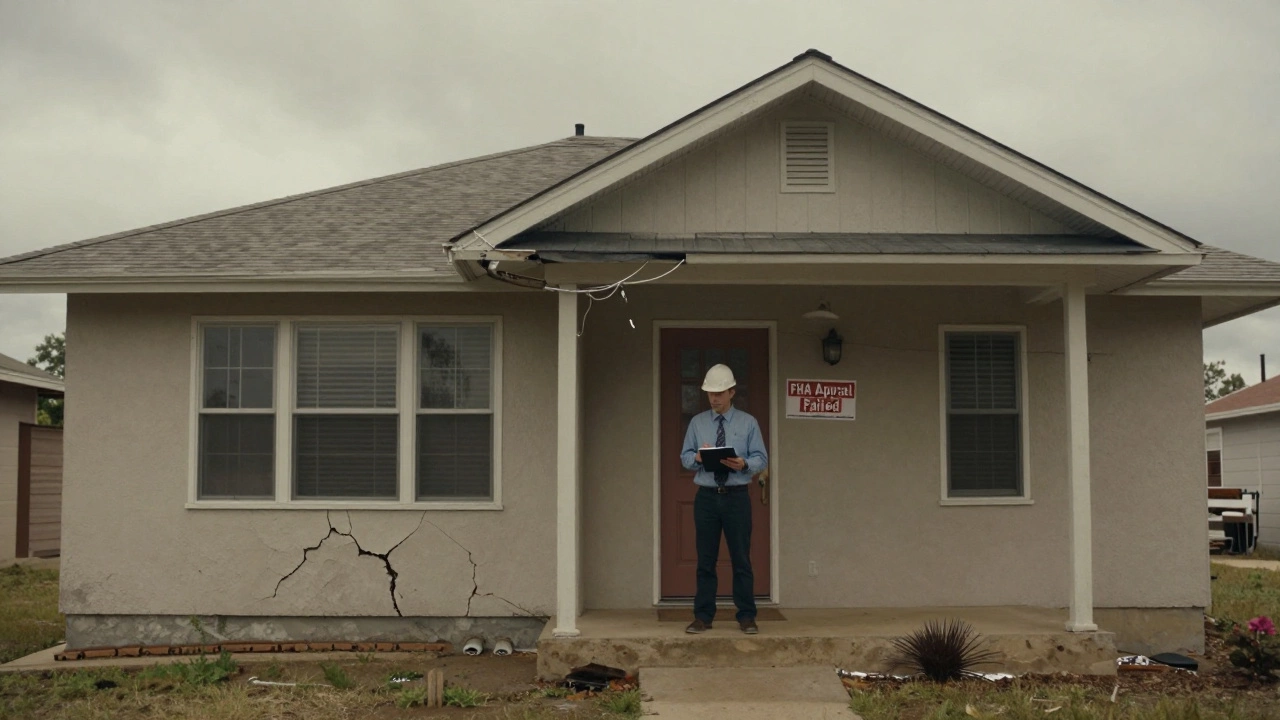
FHA Approval Qualification Checker
Check Your Home's FHA Eligibility
This tool verifies if your potential home meets the Federal Housing Administration's minimum safety and structural standards. Use before making an offer to avoid loan denial.
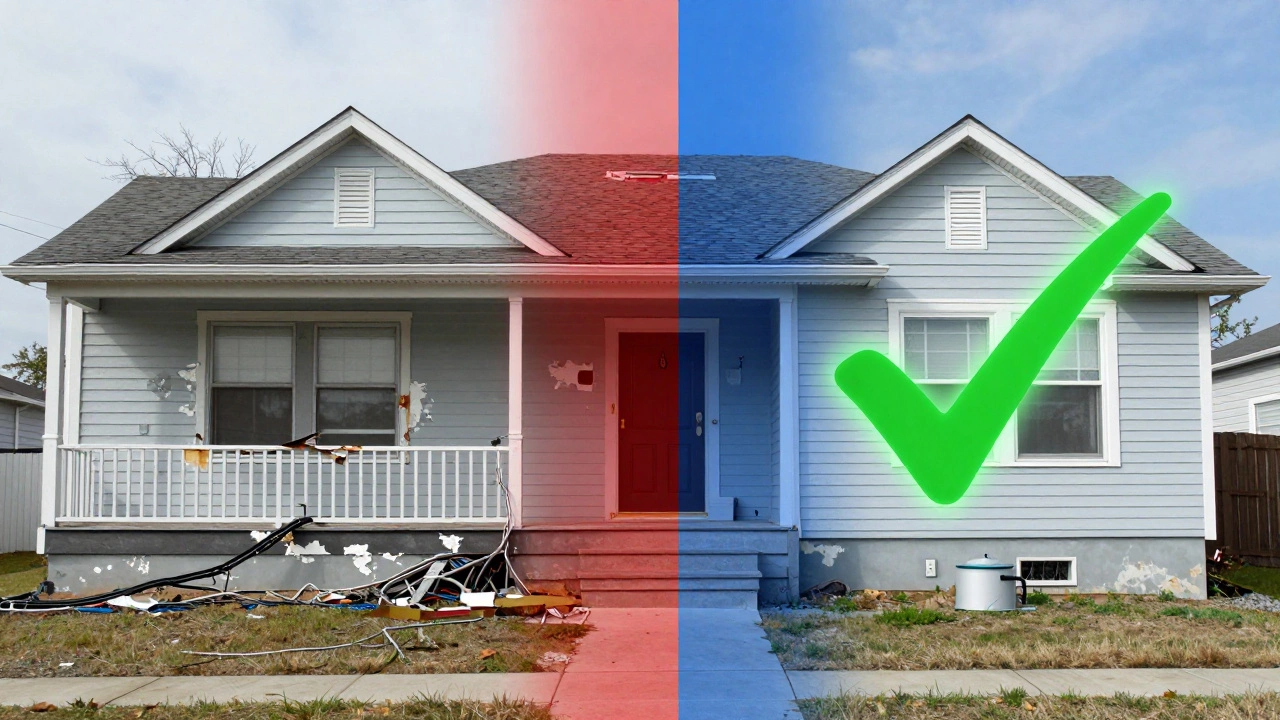
FHA APPROVED
Your home meets minimum FHA requirements. However, always get a professional appraisal before finalizing your offer.
FHA NOT APPROVED
Your home does not meet minimum FHA standards. Common issues:
- Ask seller to fix issues
- Negotiate price reduction
- Walk away with earnest money refund
If you're a first-time home buyer, you've probably heard the term FHA approved thrown around. But what does it really mean? And why does it matter when you're trying to buy your first home? The answer isn't just about paperwork-it’s about safety, value, and whether the house you’re considering can actually support an FHA loan. Not every home qualifies, even if the price seems right. Here’s what you need to know to avoid getting stuck in a dead-end deal.
What Is an FHA Approved House?
An FHA approved house is a property that meets the minimum standards set by the Federal Housing Administration (FHA), a U.S. government agency that insures mortgages. This doesn’t mean the house is perfect-it just means it’s safe, sound, and secure enough for the government to back a loan on it. FHA loans are popular with first-time buyers because they allow low down payments (as low as 3.5%) and more flexible credit scores. But if the house doesn’t meet FHA guidelines, you can’t use that loan. Period.
This isn’t optional. Lenders won’t approve the loan. Sellers won’t accept your offer. And you’ll waste time, money, and emotional energy chasing a home that’s off-limits.
Key Requirements for FHA Approval
The FHA doesn’t just look at the price tag. It checks the whole house-from the roof to the foundation. Here are the non-negotiables:
- Structural integrity: The foundation, roof, and load-bearing walls must be in good condition. No major cracks, sagging floors, or rotting wood. A leaning porch? That’s a red flag.
- Safe water and sewage: The home must have working plumbing, a functioning septic system or city sewer connection, and clean, potable water. No well water without a tested, certified system.
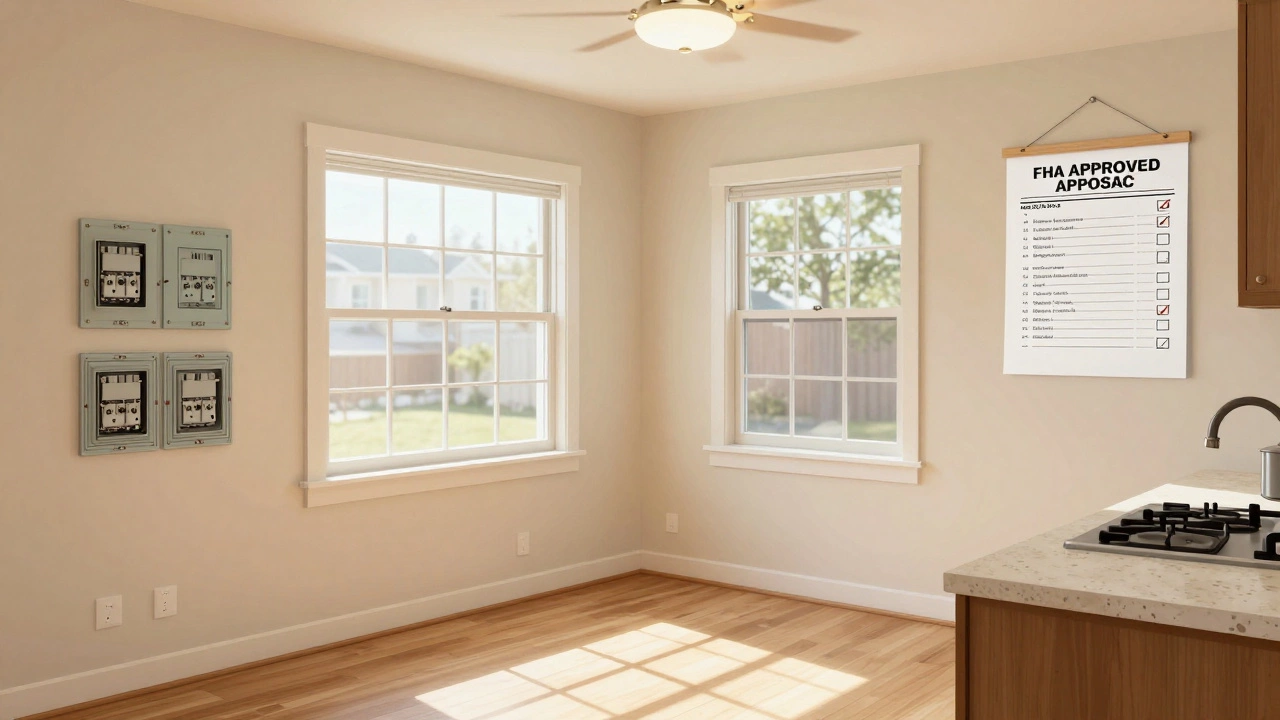
- Electrical safety: Outlets must be grounded. Wiring must be up to code. Knob-and-tube wiring? That’s a deal-breaker.
- Lead-based paint: Homes built before 1978 must have lead paint inspected. If it’s peeling or chipping, repairs are required before closing.
- Health and safety hazards: Mold, asbestos, carbon monoxide leaks, or exposed wiring can all trigger a failed inspection. Even a broken handrail on stairs can cause issues.
- Minimum habitable space: The home must have at least one bedroom, one bathroom, and a kitchen. No converted garages without proper permits and insulation.
These aren’t suggestions. They’re rules. And they’re enforced by FHA-approved appraisers during the mandatory inspection.
The FHA Inspection Process
When you apply for an FHA loan, the lender orders an FHA appraisal. This isn’t your typical home inspection. It’s stricter. The appraiser walks through the house with a checklist that includes over 30 safety and condition points. They don’t care if the kitchen has granite countertops-they care if the stove works and the windows seal shut.
Here’s what happens in real life: A buyer in Ohio fell in love with a 1960s ranch house. The price was $185,000. The seller was motivated. But during the FHA appraisal, the appraiser found a cracked foundation, a leaking roof, and outdated aluminum wiring. The seller refused to fix it. The loan was denied. The buyer lost their earnest money deposit and had to start over.
That’s why you need to know the rules before you fall in love with a house. Ask your real estate agent: "Has this home been FHA approved before?" If they don’t know, ask for the property’s last appraisal report.
What Kind of Homes Usually Get Approved?
FHA loans work best with homes that are move-in ready. That means:
- New construction (built after 2010)
- Condos in FHA-approved complexes
- Single-family homes built after 1970 with recent updates
- Manufactured homes on permanent foundations (with FHA-approved HUD tags)
Older homes aren’t automatically disqualified-but they need more work. A 1920s bungalow with updated plumbing, a new roof, and no lead paint? It can qualify. But if it’s got a sagging porch, a faulty furnace, or mold in the basement? It’s out.
Foreclosures and short sales are risky. Banks often sell them "as-is." That means no repairs. That means no FHA loan. You might get a great price, but you’ll need cash for repairs-or walk away.
What Happens If the House Fails?
If the FHA appraisal comes back with conditions, you have three options:
- Ask the seller to fix it: Most sellers will agree to minor repairs if they want to sell. Ask for a repair credit or have them handle the work before closing.
- Negotiate a lower price: If repairs are expensive, ask the seller to lower the price to cover the cost. For example, if fixing the roof costs $5,000, ask for a $5,000 price reduction.
- Walk away: If the seller refuses and you can’t afford the repairs yourself, walk away. Your earnest money is usually refundable if the appraisal fails.
Don’t try to push through. FHA loans are not flexible. If the house doesn’t meet standards, there’s no workaround.
How to Check If a Home Is Already FHA Approved
You don’t have to wait for the appraisal to find out. Here’s how to check ahead of time:
- Ask the listing agent for the property’s last FHA appraisal report. It’s public record.
- Search the FHA’s Approved Condominium Project List if you’re looking at a condo.
- Use third-party tools like FHA.gov’s property lookup or real estate platforms that flag FHA-eligible homes.
- Look for signs: New roof? Updated electrical? No visible mold? These are good indicators.
If the home was sold with an FHA loan in the past five years, it’s likely still eligible. But conditions change. Always get a new appraisal.
Common Mistakes First-Time Buyers Make
Most people think FHA approval is about credit score or income. It’s not. It’s about the house. Here are the biggest mistakes:
- Buying a fixer-upper without checking FHA rules
- Assuming a low price means it’s a good deal (it’s not if you can’t finance it)
- Skipping the appraisal contingency in the contract
- Believing the seller will fix everything (they often won’t)
- Not asking for the last appraisal report
The worst mistake? Falling in love with a house before you know if it qualifies. That’s how you lose time, money, and peace of mind.
Bottom Line: Know Before You Bid
FHA approval isn’t a bonus-it’s a requirement. If you’re using an FHA loan to buy your first home, the house must meet strict safety and condition standards. No exceptions. No shortcuts.
Before you make an offer, ask: "Has this home passed an FHA inspection in the last 12 months?" If the answer is "I don’t know," walk away until you get a clear answer. Work with a real estate agent who knows FHA rules inside and out. And never skip the appraisal.
A house that’s FHA approved isn’t glamorous. But it’s safe. It’s secure. And most importantly-it’s financeable. That’s worth more than a fancy backsplash or hardwood floors.
Can a home with a septic tank be FHA approved?
Yes, as long as the septic system is functioning properly, has been inspected within the last year, and meets local health codes. The appraiser will check for signs of leakage, odors, or backup. A failed septic system will cause the FHA appraisal to fail.
Do FHA approved homes cost more?
Not necessarily. FHA approved homes can be priced anywhere from affordable to mid-range. The approval doesn’t affect the price-it affects whether you can use an FHA loan to buy it. You’ll often find better deals on homes that need minor repairs, because sellers know FHA buyers can’t take them "as-is."
Can I use an FHA loan to buy a fixer-upper?
Not with a standard FHA loan. But there’s a special program called FHA 203(k) that lets you finance both the purchase and repairs in one loan. It’s more complex and requires a detailed repair plan, but it’s designed exactly for homes that need work.
What if the seller won’t make repairs?
If the FHA appraisal fails and the seller refuses to fix the issues, you can walk away from the deal without losing your earnest money-as long as your contract includes an appraisal contingency. Always include this clause. It’s your protection.
Do FHA loans have income limits?
No, there are no income limits for FHA loans. But your debt-to-income ratio must be under 43% (in most cases). Lenders will check your job history, credit score, and monthly debts. You don’t need to be low-income-you just need to prove you can afford the payments.
Corbin Fairweather
I am an expert in real estate focusing on property sales and rentals. I enjoy writing about the latest trends in the real estate market and sharing insights on how to make successful property investments. My passion lies in helping clients find their dream homes and navigating the complexities of real estate transactions. In my free time, I enjoy hiking and capturing the beauty of landscapes through photography.
view all postsWrite a comment