
Property Value Estimator
Estimate Your Home's Market Value
This tool uses the Comparative Market Analysis (CMA) method explained in the article to provide a realistic estimate of your property's value based on local market conditions.
Estimated Market Value
This estimate is based on:
- Recent sales of comparable properties in your neighborhood
- Property characteristics (size, bedrooms, bathrooms)
- Market conditions (location, year built)
When you hear the term property valuation, it might sound like something only banks or appraisers care about. But if you’re thinking of selling, buying, refinancing, or even just understanding what your home is really worth, this isn’t just jargon-it’s essential knowledge.
What exactly is property valuation?
Property valuation is the process of estimating the market value of a piece of real estate at a specific point in time. It’s not about what you paid for it five years ago, or what your neighbor claims their house is worth. It’s about what a willing buyer would pay for it today, under normal market conditions, with both sides acting in their best interest and with full knowledge of the facts.
This number matters because it drives decisions. Lenders won’t give you a mortgage higher than the property’s appraised value. Tax authorities use it to calculate your property taxes. Insurance companies rely on it to set coverage limits. And if you’re selling, pricing it too high means it sits empty; too low, and you leave money on the table.
How is property valuation done?
There are three main methods professionals use to determine property value, and they’re not guesses-they’re based on data and standards.
- Comparative Market Analysis (CMA): This is the most common method for homes. Appraisers look at recently sold properties in the same neighborhood that are similar in size, age, condition, and features. For example, if three homes like yours sold for $320,000, $335,000, and $328,000 in the last 90 days, your home’s value likely falls in that range. Adjustments are made for upgrades, damage, or unique features.
- Income Approach: Used mostly for rental properties or commercial buildings. It calculates value based on the income the property generates. If a duplex brings in $2,000 a month in rent after expenses, and similar properties in the area have a 6% capitalization rate, the value is roughly $400,000 ($24,000 annual income ÷ 0.06).
- Cost Approach: This estimates how much it would cost to rebuild the property from scratch, including land value, minus depreciation. It’s often used for new constructions, unique buildings, or insurance claims. If your 1970s ranch house would cost $250,000 to rebuild, and the land is worth $80,000, but the house has lost $50,000 in value due to wear and outdated systems, the valuation is $280,000.
Most residential appraisals rely heavily on the CMA because it reflects what real buyers are actually paying right now.
Who performs property valuations?
Not just anyone can legally value a property for lending or legal purposes. Licensed or certified appraisers are trained professionals who follow strict guidelines, like the Uniform Standards of Professional Appraisal Practice (USPAP). They don’t work for the buyer or seller-they’re neutral third parties.
Real estate agents can give you an estimate called a CMA, but it’s not the same as a formal appraisal. An agent’s estimate might be optimistic to win your listing. A certified appraiser’s report is legally binding and used by banks to approve loans.
Why does property valuation change over time?
Property values aren’t static. They rise and fall based on real, measurable factors:
- Location: A house two blocks from a new subway station might jump 15% in value. One near a closed factory could drop 20%.
- Market conditions: In a seller’s market, homes sell quickly and often above asking price. In a buyer’s market, values stagnate or fall.
- Economic trends: Interest rates, inflation, and unemployment all influence buyer demand and borrowing power.
- Property condition: A kitchen remodel can add $20,000-$40,000. A leaky roof or mold issue can knock off $15,000 or more.
- Local regulations: New zoning laws, school district boundaries, or tax incentives can shift neighborhood values overnight.
For example, after the 2023 opening of the Greenfield Light Rail extension, homes within a half-mile saw average valuation increases of 18% within 12 months, according to local tax assessor data.
What happens if the valuation is lower than the purchase price?
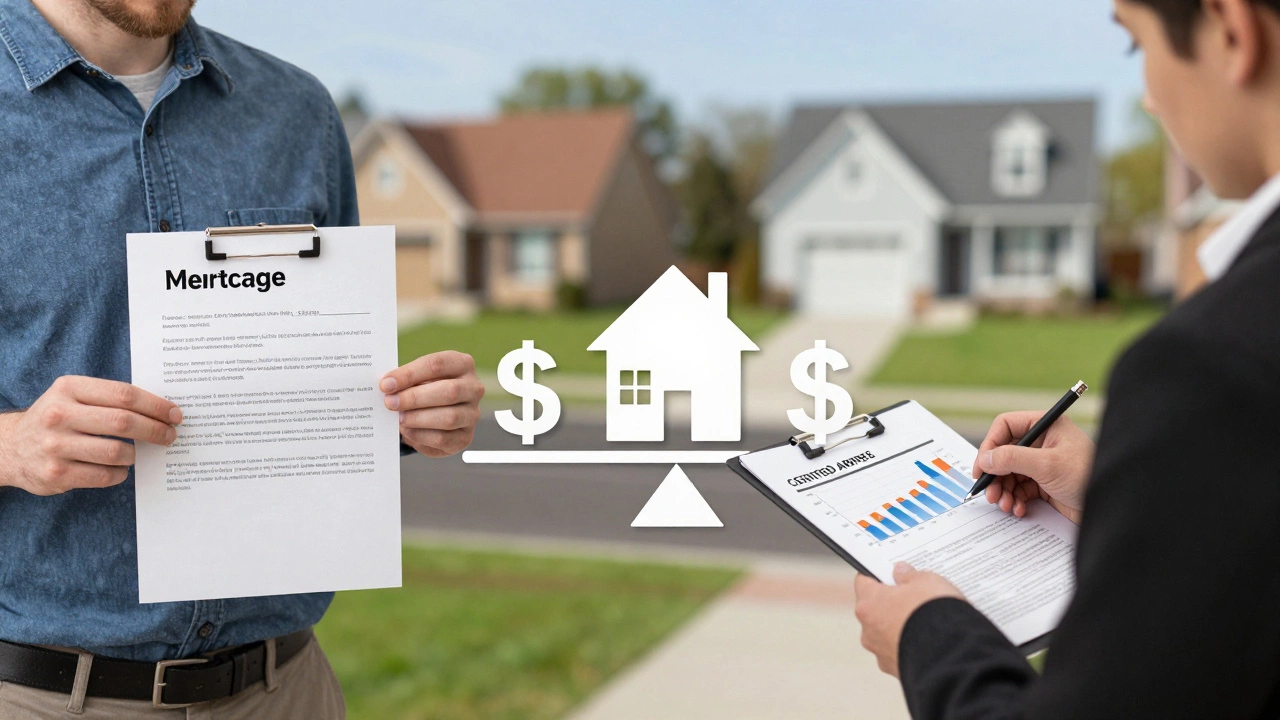
This is one of the most stressful moments in a home sale. If you’ve agreed to buy a house for $350,000, but the appraisal comes in at $325,000, the lender won’t loan you the full amount. You have three choices:
- Negotiate the price down to the appraised value. The seller might agree, especially if the market is slowing.
- Pay the difference out of pocket. You’d need to come up with $25,000 more in cash, which isn’t always possible.
- Challenge the appraisal. If you have evidence the appraiser missed comparable sales or made errors (like misstating square footage), you can request a reconsideration of value with supporting documentation.
Most buyers who push back successfully do so by providing recent, accurate comparables the appraiser overlooked-not just opinions.
Can you get a free property valuation?
Yes, but with big caveats.
Online tools like Zillow’s Zestimate or Redfin’s Estimate give you a ballpark figure based on public records and algorithms. But they’re often off by 5-15%, sometimes more. Why? They don’t see the inside of the home. They don’t know if the basement is finished, if the roof was replaced last year, or if the lot has a view or a noisy neighbor.
These tools are useful for a rough idea, but never for making financial decisions. A $100,000 error on a $500,000 home could cost you tens of thousands.
Some real estate agents offer free CMAs to attract clients. These are more accurate than online tools but still not official appraisals. Use them as a starting point, not a final answer.
How often should you get a property valuation?
You don’t need one every year. But here’s when you should:
- Before listing your home for sale - to price it right from day one.
- Before refinancing - lenders require an appraisal.
- After major renovations - to ensure your investment is reflected in your home’s value.
- If you’re disputing property taxes - a recent appraisal can help lower your bill.
- After a major local change - like a new highway, school closure, or commercial development nearby.
For most homeowners, getting a formal valuation every 3-5 years is enough unless market conditions are shifting rapidly.

What’s the difference between valuation and assessment?
This trips up a lot of people. Property valuation is the estimated market value used by buyers, sellers, and lenders. Property assessment is the value assigned by your local government for tax purposes.
Assessments are often lower than market value because governments use slower methods and may only reassess every few years. In some areas, assessments are capped by law. So your home might be worth $400,000 on the open market, but assessed at $320,000 for tax purposes.
Always check your assessment notice each year. If it’s higher than your home’s actual value, you can appeal it with a recent appraisal.
How to prepare for a property valuation
Want to get the best possible value? Don’t wait until the appraiser shows up.
- Clean and declutter. A tidy home looks bigger and better maintained.
- Fix small issues: leaky faucets, broken doorknobs, chipped paint.
- Have documentation ready: permits for renovations, receipts for new appliances, energy efficiency upgrades.
- Point out upgrades. Show the appraiser the new HVAC system, solar panels, or custom cabinetry.
- Don’t argue with the appraiser. They’re not there to please you-they’re there to report facts.
These steps won’t magically add $50,000, but they can prevent a $10,000 deduction.
Final thought: Valuation is your financial anchor
Property valuation isn’t just about money-it’s about control. When you understand your home’s true value, you’re not guessing. You’re making informed decisions. Whether you’re selling, buying, refinancing, or just keeping tabs on your biggest asset, knowing what your property is really worth gives you power in a market full of noise.
Don’t let someone else’s estimate define your home’s value. Get the facts. Know the numbers. Own your equity.
Is property valuation the same as a home inspection?
No. A home inspection looks for structural problems, safety hazards, and system conditions-like a faulty electrical panel or mold. A property valuation estimates market value based on comparable sales and property features. You need both, but they serve completely different purposes.
Can I use an online tool to get a valuation for a mortgage?
No. Lenders require a formal appraisal from a licensed appraiser. Online estimates are not legally acceptable for mortgage approval. They’re useful for research, but never for securing a loan.
How long does a property valuation take?
The on-site visit usually takes 30 to 60 minutes. The full report, including analysis and comparables, typically takes 2 to 5 business days to complete. In busy markets, it can take longer.
Does a property valuation include the land value?
Yes. A full property valuation always includes the value of the land the structure sits on. The land portion is often the most stable part of the valuation, especially in high-demand areas.
What if my property is unique or unusual?
Unique properties-like historic homes, custom builds, or properties on large lots-require more detailed analysis. Appraisers may use the cost approach more heavily or find comparables from farther away. They’ll also consider special features like architectural significance or zoning restrictions.
Do I need to be home during the valuation?
You’re not required to be home, but it helps. If you’re there, you can point out upgrades, answer questions about recent repairs, and ensure the appraiser sees the full scope of the property. If you’re not home, make sure access is clear and any pets are secured.
Corbin Fairweather
I am an expert in real estate focusing on property sales and rentals. I enjoy writing about the latest trends in the real estate market and sharing insights on how to make successful property investments. My passion lies in helping clients find their dream homes and navigating the complexities of real estate transactions. In my free time, I enjoy hiking and capturing the beauty of landscapes through photography.
view all postsWrite a comment