

$30,000 Loan Affordability & Eligibility Calculator
Your Financial Profile
Enter your details to see if you qualify for a $30,000 loan.
You have a specific number in mind: $30,000. Maybe it’s for a down payment on your first home, a major renovation, or consolidating high-interest debt. The immediate question isn't just whether you can afford the monthly payments, but whether a lender will even look at your application. In the world of lending, credit scores are the gatekeepers. But what is the magic number that unlocks a loan of this size?
For a standard unsecured personal loan of $30,000, most traditional banks and credit unions require a "good" to "excellent" credit score. Generally, this means a FICO score of 720 or higher. If your score drops below 690, you’ll likely face significantly higher interest rates or outright rejection from major lenders. However, the landscape shifts if you are looking at secured loans or alternative financing options.
The Baseline: What Lenders Actually Look For
Lenders don't just glance at a single number; they assess risk. A $30,000 personal loan is considered a mid-sized unsecured debt. Because there is no collateral (like a house or car) backing it up, the lender relies entirely on your promise to pay. Your credit score is the statistical prediction of how likely you are to keep that promise.
Here is how different lenders typically segment borrowers for this loan amount:
- Excellent (720+): You qualify for the best interest rates (often between 5% and 10% APR). Major banks like Chase, Bank of America, and Wells Fargo prefer this tier.
- Good (680-719): You are eligible for approval, but rates may be slightly higher (10%-15%). Online lenders like SoFi or LightStream often compete here.
- Fair (640-679): Approval becomes difficult with traditional banks. You might find offers from subprime lenders, but expect rates above 15%.
- Poor (Below 640): Traditional unsecured loans for $30,000 are rarely available. You may need to explore secured options or credit-builder programs.
If you are a first-time homebuyer, the stakes are different. Mortgage lenders have their own rules. For a conventional mortgage, the minimum is often 620, but to get a $30,000 down payment assistance grant or a favorable rate, you still want that 720+ score. FHA loans allow scores as low as 580, but again, the cost of borrowing rises as the score falls.
Why the Score Isn't the Only Factor
Having a 750 credit score doesn't guarantee a $30,000 loan if your financial picture has other cracks. Lenders use a holistic approach, weighing several factors alongside your credit history.
| Factor | What It Means | Target Metric |
|---|---|---|
| Debt-to-Income Ratio (DTI) | The percentage of your gross monthly income that goes toward debt payments. | Below 36% (ideally below 30%) |
| Credit Utilization | How much of your available credit limit you are currently using. | Below 30% (under 10% is optimal) |
| Employment History | Stability of income source over the last 2-3 years. | Consistent employment in same field |
| Recent Hard Inquiries | Number of times lenders checked your credit recently. | Fewer than 3 in the last 6 months |
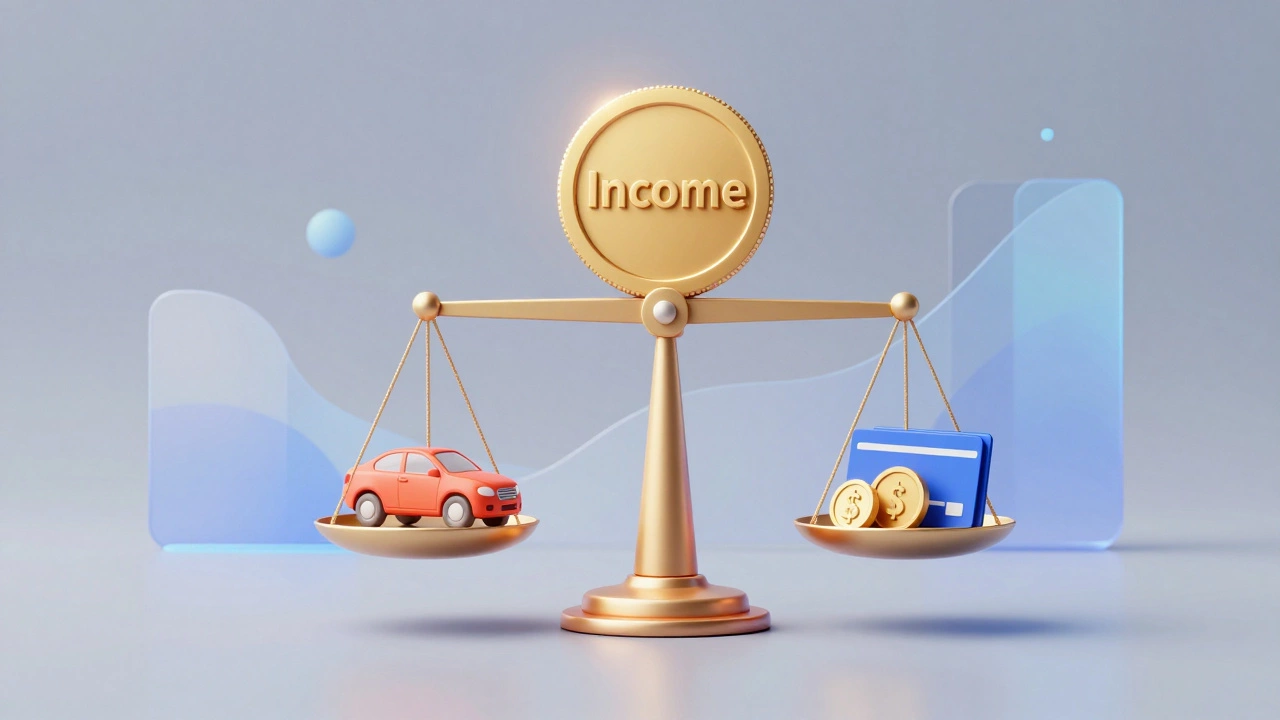
For example, if you earn $60,000 a year ($5,000/month), a DTI of 36% means your total monthly debt payments (including the new loan) shouldn't exceed $1,800. If you already have a car payment, student loans, and credit card minimums totaling $1,500, adding a $30,000 loan payment of $600 would push you to $2,100-a DTI of 42%. Most lenders will reject this application regardless of your perfect credit score.
Alternatives When Your Score Is Too Low
If your credit score sits in the "fair" or "poor" range, applying for a large unsecured loan can hurt your chances further due to hard inquiries. Instead, consider these strategies tailored for first-time buyers and those rebuilding credit.
1. Secured Personal Loans
Offer a lender something valuable as collateral, such as a certificate of deposit (CD), savings account, or even a vehicle. This reduces their risk, allowing them to approve the loan despite a lower credit score. Interest rates are typically lower than unsecured subprime loans.
2. Credit Union Memberships
Credit unions are member-owned non-profits. They often have more flexible underwriting guidelines than big banks. They may look closer at your character, local ties, and employment stability rather than relying solely on automated algorithms. Joining a local credit union can sometimes bridge the gap for a borrower with a 650 score.
3. Co-signers
A co-signer with excellent credit and stable income essentially guarantees the loan. This is common for younger first-time buyers who haven't built long credit histories yet. However, this puts the co-signer's finances at risk if you miss payments, so it should only be used as a last resort.
4. Down Payment Assistance Programs (DPAPs)
Since many people seek $30,000 loans for home buying, look into government-backed DPAPs. These are often grants or second mortgages with deferred payments. They don't always require high credit scores, though they do have income limits and property restrictions. Check with your state's housing finance agency for specific programs.
How to Boost Your Score Quickly
If you need a $30,000 loan in the next 3 to 6 months, you can take concrete steps to improve your standing. You won't jump 100 points overnight, but small gains can move you from "rejected" to "approved."
- Dispute Errors: Pull your free reports from AnnualCreditReport.com. Look for inaccuracies like late payments that were actually on time or accounts that don't belong to you. Disputing these can result in quick score bumps.
- Lower Credit Card Balances: Paying down revolving debt is the fastest way to improve utilization. Aim to get balances below 10% of your limits before applying.
- Become an Authorized User: Ask a family member with a long-standing, low-balance credit card to add you as an authorized user. Their positive history may be added to your report, boosting your average account age and lowering utilization.
- Avoid New Applications: Every time you apply for credit, it triggers a hard inquiry, which temporarily dips your score. Freeze any new applications until you secure the $30,000 loan.

Understanding the Cost of Borrowing
When evaluating a $30,000 loan, focus on the Annual Percentage Rate (APR), not just the interest rate. The APR includes the interest plus any origination fees, giving you the true cost of the loan.
Consider two scenarios for a 5-year term:
- Scenario A (Score 750, 8% APR): Monthly payment ~$608. Total interest paid: ~$6,480.
- Scenario B (Score 650, 18% APR): Monthly payment ~$724. Total interest paid: ~$13,440.
The difference in credit score results in an extra $6,960 in costs. This highlights why improving your score by even 50 points can save you thousands of dollars over the life of the loan.
Next Steps for First-Time Buyers
If you are targeting a home purchase, start by getting pre-approved. This process involves a soft pull initially, then a hard pull once you submit documentation. It shows sellers you are serious and financially capable. Simultaneously, research local first-time homebuyer programs that offer closing cost assistance or down payment grants, which can reduce the need for a large personal loan altogether.
Remember, a credit score is a snapshot, not a life sentence. With disciplined management and strategic planning, you can position yourself to secure the funding you need on favorable terms.
Can I get a $30,000 loan with bad credit?
It is very difficult to get an unsecured $30,000 loan with bad credit (below 640). Most traditional banks will reject the application. Your best options are secured loans (using collateral), finding a credit union with flexible guidelines, or using a co-signer with good credit. Be wary of predatory lenders offering high-interest rates.
What is the best credit score for a personal loan?
A credit score of 720 or higher is considered excellent for personal loans. Borrowers in this range typically qualify for the lowest interest rates and highest approval odds from major banks and online lenders.
How much does a $30,000 loan cost per month?
The monthly payment depends on the interest rate and loan term. For a 5-year loan at 8% APR, the payment is approximately $608. At 15% APR, it rises to about $727. Always check the APR to understand the total cost including fees.
Does applying for a loan hurt my credit score?
Yes, applying for a loan triggers a "hard inquiry," which can lower your score by 5 to 10 points. Multiple applications in a short period can signal financial distress to lenders. Try to space out applications or shop around within a narrow window (14-45 days) so inquiries count as one.
Can I use a personal loan for a home down payment?
Most mortgage lenders do not allow you to use borrowed funds for a down payment because it increases your debt-to-income ratio and risk. Some exceptions exist for certain government-backed loans or gifts from family members, but you must verify with your mortgage broker first.
Corbin Fairweather
I am an expert in real estate focusing on property sales and rentals. I enjoy writing about the latest trends in the real estate market and sharing insights on how to make successful property investments. My passion lies in helping clients find their dream homes and navigating the complexities of real estate transactions. In my free time, I enjoy hiking and capturing the beauty of landscapes through photography.
view all postsWrite a comment