
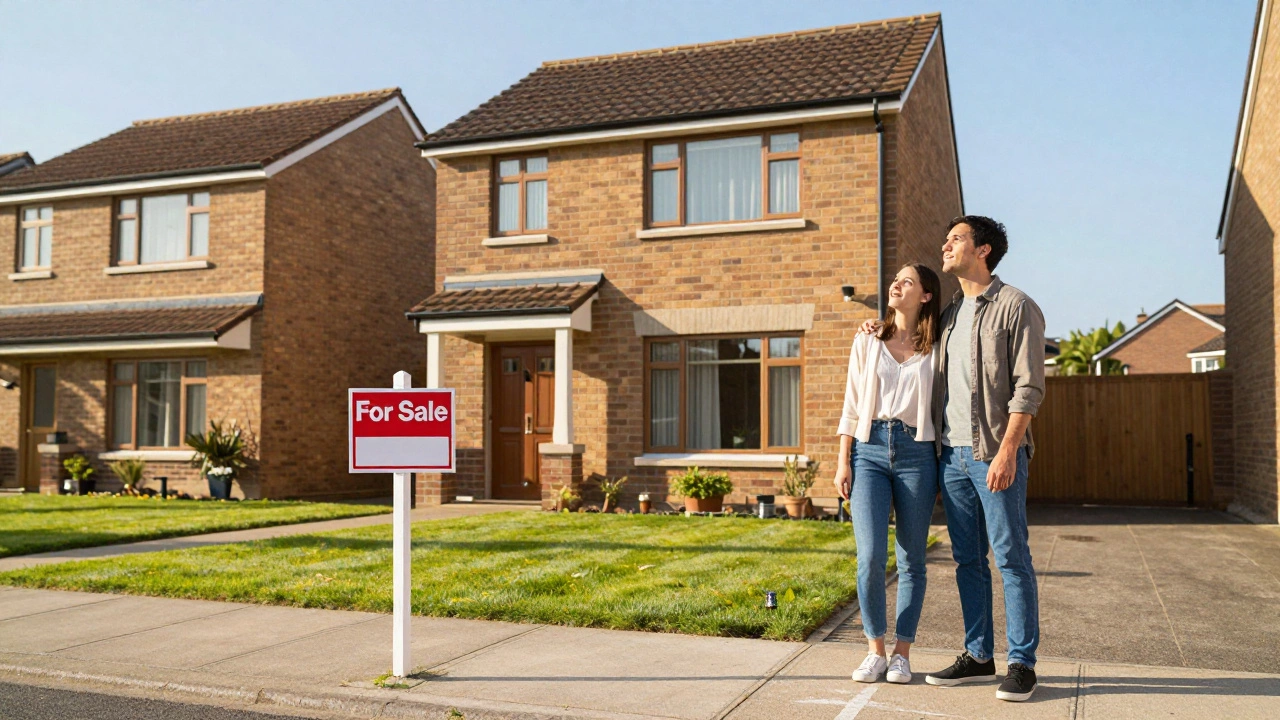
Shared Ownership Cost Estimator
Estimated Total Monthly Payment
Staircasing Insight
If you increase your share to 25%, your mortgage payment will increase, but your rent will decrease. This helps build long-term equity.
Quick Summary of 10% Ownership
- You own 10% of the home's value and are responsible for that portion of the mortgage.
- You pay rent to a housing association or developer for the 90% you don't own.
- You have the right to live in the entire property.
- You are typically responsible for all maintenance and repairs, regardless of your share.
- You can increase your ownership over time through a process called staircasing.
The Financial Breakdown: Mortgages and Rent
When you own 10%, your financial commitment is split into two distinct streams. First, there is the mortgage for your 10% share. Because the loan amount is so low compared to the full property value, the monthly repayments are usually very manageable. For example, on a $400,000 home, you are only mortgaging $40,000. This makes the barrier to entry incredibly low.
The second part is the rent. Since a Housing Association still owns 90% of the building, they charge you a monthly rent for that portion. This is where the math gets tricky. If the rent on the 90% share is too high, it might feel like you're just renting a home with a very expensive hobby on the side. You need to look at the "total monthly cost" (mortgage + rent + service charges) to see if it actually saves you money compared to a standard rental.
Who Really Controls the House?
You might wonder if you can paint the walls or renovate the kitchen if you only own a tenth of the place. In most shared ownership contracts, you have the freedom to decorate and make internal changes, but you'll need permission for structural alterations. You are the legal occupant, and the home is yours to live in, but you are essentially in a partnership with the landlord.
One of the biggest surprises for new owners is the maintenance. Even though you only own 10%, if a pipe bursts or the roof leaks, you aren't just paying 10% of the bill. In most cases, the homeowner is responsible for 100% of the repairs. This is a critical detail to remember when budgeting. You are treating the property as your own, but you only profit from a small slice of its value growth.
| Feature | 10% Shared Ownership | 100% Ownership |
|---|---|---|
| Upfront Deposit | Very Low | High |
| Monthly Payments | Mortgage + Rent | Mortgage Only |
| Equity Growth | 10% of Value Increase | 100% of Value Increase |
| Maintenance Cost | 100% Responsibility | 100% Responsibility |
| Control/Autonomy | High (with some restrictions) | Total |

Growing Your Share Through Staircasing
Owning 10% is rarely the end goal; it's a starting point. The process of buying more shares in your home is known as Staircasing. This allows you to move from 10% to 25%, 50%, and eventually 100% ownership. Every time you staircase, your mortgage increases, but your monthly rent decreases.
Staircasing isn't automatic. You have to prove you can afford the larger mortgage and pay for a new valuation of the property. This is the "investment" side of the deal. If the property value goes up, you benefit from that 10% increase, but you also have to pay more to buy the next slice. For instance, if you bought in at $40,000 (10%) and the house value rises to $500,000, buying another 10% now costs you $50,000 instead of $40,000.
The Risks: What Happens When You Sell?
Selling a shared ownership home is different from selling a standard house. You can't just put it on the open market and take the highest bid. Usually, you have to offer the Housing Association the first right of refusal to buy back your share, or they must approve the new buyer to ensure they also qualify for the shared ownership scheme.
The biggest risk is "negative equity" on a small scale. If the market crashes and the home's value drops, your 10% equity could vanish. However, because the initial investment was so low, the risk is often smaller than if you had taken on a massive 100% mortgage. You are essentially hedging your bets by keeping your debt low.
Is 10% Ownership Right for You?
This path is perfect for people who have a steady income but struggle to save a traditional deposit. It turns a "maybe one day" home dream into a "right now" reality. However, if you can afford a slightly larger share-say 25% or 50%-you will save a significant amount of money on rent over the long term. Shared ownership at 10% is a strategy for entry, not necessarily for long-term wealth building, unless you are aggressive about staircasing.
Before signing, always check the lease. Some contracts have "service charges" that can be surprisingly high, especially in modern apartment blocks with elevators and concierge services. These fees are paid on top of your mortgage and rent, and they can eat into your monthly budget quickly.
Can I be evicted if I only own 10%?
It is very unlikely, but possible. Because you are both an owner and a tenant, you have strong protections. However, if you fail to pay your rent to the housing association or breach the terms of the lease (like running a business from home without permission), the landlord could potentially start legal proceedings to recover the property.
Do I pay Council Tax on the whole house or just 10%?
You pay 100% of the Council Tax. The tax is based on the property's occupation and value, not on who holds the equity. Since you are the sole resident, you are responsible for the full bill regardless of your ownership percentage.
How does insurance work with a 10% share?
Usually, the building insurance is handled by the housing association and charged back to you as part of your service fee. However, you are still responsible for your own contents insurance to protect your personal belongings inside the home.
Can I rent out a room in a shared ownership home?
Most shared ownership agreements forbid you from renting out the entire property (subletting). However, many allow you to take in a lodger, provided you get written permission from the housing association first. Always check your specific lease agreement before doing this.
What happens if the housing association goes bust?
This is rare, as most are regulated non-profits. If it happened, another housing association or a government body would typically take over the management of the properties. Your 10% ownership is a legal title registered with the land registry, so your equity remains yours regardless of who manages the rest of the building.
Next Steps for Prospective Buyers
If you're considering a 10% share, start by getting a "Decision in Principle" from a mortgage lender who specializes in shared ownership. Not all banks are comfortable with such small shares. Next, create a spreadsheet that combines the estimated mortgage, the specific rent for the 90% share, and the monthly service charges. If that total is significantly lower than your current rent, you've found a viable path to homeownership.
Corbin Fairweather
I am an expert in real estate focusing on property sales and rentals. I enjoy writing about the latest trends in the real estate market and sharing insights on how to make successful property investments. My passion lies in helping clients find their dream homes and navigating the complexities of real estate transactions. In my free time, I enjoy hiking and capturing the beauty of landscapes through photography.
view all postsWrite a comment