

Shared Ownership vs. Renting Calculator
Property Details
Cost Assumptions
Shared Ownership
Private Renting
The Verdict
You’ve seen the headlines. House prices are high. Rent is eating up your paycheck. And then there’s that buzzword: shared ownership is a government-backed scheme that allows you to buy a share of a home and pay rent on the rest. It sounds like the perfect ladder into homeownership. But here is the hard question most brochures don’t answer: Is it actually a good investment?
If you are looking at this purely as a financial vehicle to get rich quick, the answer is usually no. If you are looking for a place to live while building equity with less cash upfront, the answer might be yes. The truth sits somewhere in the middle, buried under mortgage rates, service charges, and the complex rules of staircasing. Let’s break down the math so you can decide if it works for your wallet.
The Math Behind the Share
To understand if shared ownership is a smart move, you have to look at what you are actually paying. Unlike buying a house outright, where your monthly payment goes entirely toward paying off a debt you own, shared ownership splits your costs into two buckets.
First, you have the mortgage on the share you bought. If you buy a 50% share of a £300,000 home, you only need a mortgage for £150,000. This means your deposit requirement drops significantly. Instead of saving 10% of £300,000 (£30,000), you save 10% of £150,000 (£15,000). That is a massive relief for many first-time buyers who struggle to accumulate large savings due to high living costs.
Second, you pay rent on the remaining 50%. Here is the catch: this rent isn’t cheap. It is usually set between 2.75% and 3% of the *full* market value of the property. So, on that £300,000 home, you’d pay roughly £675 a month in rent to the housing association, plus all your usual bills and maintenance fees.
When you add the mortgage interest, the rent, and the service charges together, does it beat renting? Sometimes. Often, it is cheaper than renting a similar private property in the same area, especially in high-cost cities like London or Manchester. But it is rarely cheaper than owning outright if you could afford the full price. You are trading lower entry costs for higher ongoing overheads.
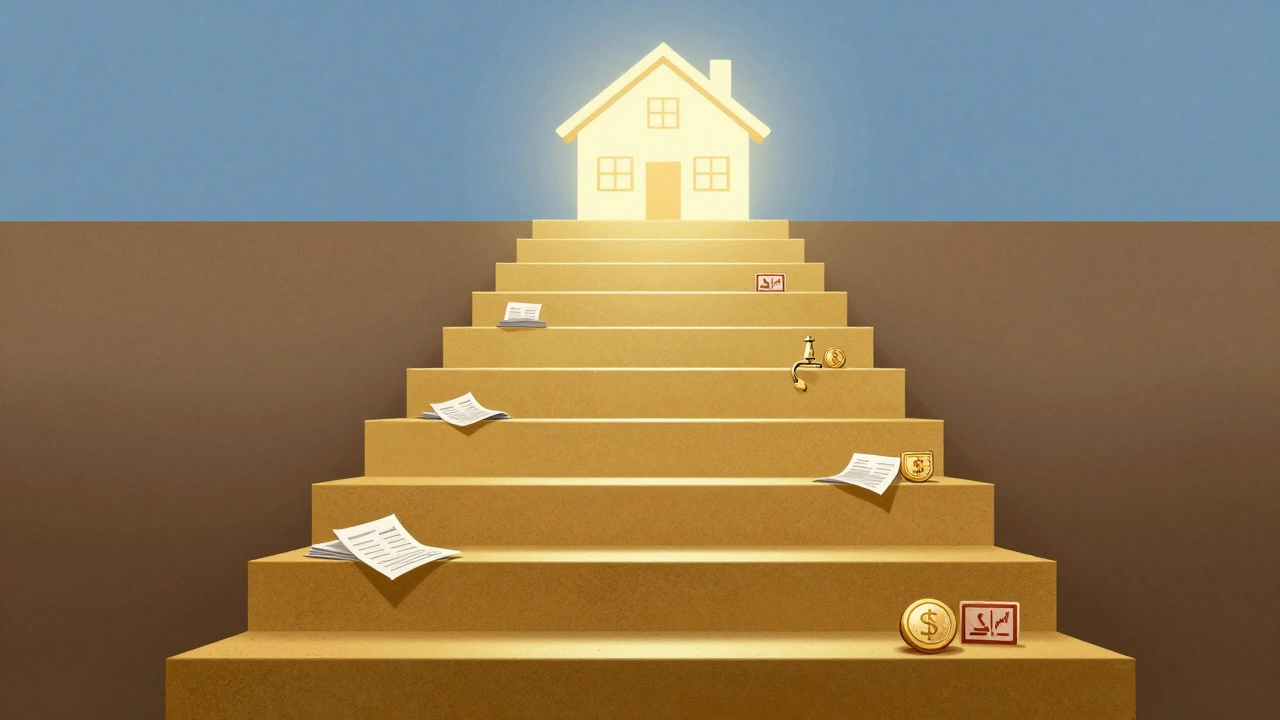
The Staircasing Strategy: Building Equity
The core appeal of shared ownership is staircasing is the process of buying additional shares in your home over time until you own 100%. This is where the "investment" part comes in. Every time you buy more shares, you are locking in value based on the current market price.
Imagine house prices rise by 5% a year. If you bought a 50% share five years ago, that share is now worth more. When you staircase to 75%, you are buying that new 25% chunk at today’s higher price. It feels expensive in the moment, but you are increasing your stake in an appreciating asset.
However, staircasing isn’t free. Each time you buy more shares, you need a new valuation and legal fees. These transaction costs can eat into your profits. Plus, most housing associations require you to wait a minimum period (often one or two years) before you can staircase again. This limits how quickly you can react to a booming market.
There is also a cap. In England, you can typically staircase up to 100%. In some newer schemes, particularly those aimed at affordable housing, you might be capped at 80%. Always check the lease terms. If you are capped at 80%, you will never fully escape the rent, which changes the long-term investment calculus completely.
Hidden Costs That Kill Returns
New investors often forget about the non-mortgage costs. These are the silent killers of your ROI (Return on Investment).
- Service Charges: Most shared ownership homes are flats or part of a managed estate. You will pay a monthly service charge for cleaning, insurance, and maintenance. These fees tend to rise faster than inflation.
- Ground Rent: While recent laws have cracked down on excessive ground rents, you still pay a nominal fee to the freeholder. Make sure this is fixed and low.
- Resale Restrictions: This is the big one. You cannot just sell your home to anyone. The housing association has the right of first refusal. They will try to resell your share to another eligible buyer. If they can’t find one within a set timeframe (usually 4-12 weeks), you can market it openly. This restriction slows down sales and can limit your pool of potential buyers, potentially lowering the sale price.
- Permission Fees: You need permission from the housing association to sublet or make major structural changes. Getting this approval can take months and may come with a fee.
These costs mean that even if the house price goes up, your net profit might be smaller than expected. For example, if a house gains £20,000 in value, but you paid £3,000 in legal fees for staircasing and £2,000 in extra service charges over the year, your real gain is reduced.
Shared Ownership vs. Private Renting
Let’s compare the two main options for someone who can’t afford a full purchase yet. We’ll use a hypothetical £250,000 apartment in Birmingham.
| Cost Factor | Shared Ownership (50%) | Private Renting |
|---|---|---|
| Upfront Deposit | £12,500 (5% of £250k share) | £0 (Usually just holding deposit) |
| Monthly Mortgage | ~£900 (on £125k loan) | £0 |
| Rent Component | ~£560 (2.75% of £250k annualized) | ~£1,100 (Market rate) |
| Service Charges | ~£150 | Often included in rent |
| Total Monthly Outgoings | ~£1,610 | ~£1,100 |
| Equity Built | Yes (Mortgage principal repayment) | No |
Look closely at the table. Your monthly bill for shared ownership is higher than renting. Why would you do it? Because every pound you pay toward the mortgage principal is yours. After ten years, you might owe less on the mortgage and own a larger percentage of the home. In private renting, that £1,100 vanishes forever. You trade higher monthly cash flow for long-term asset accumulation.

Who Should Avoid Shared Ownership?
Not everyone is suited for this model. If you fall into these categories, shared ownership might be a bad investment:
- Short-Term Movers: If you plan to move in three years, the legal fees, valuation costs, and potential resale restrictions will likely wipe out any capital growth. You need to stay put for at least five to seven years to make the economics work.
- High-Income Earners: There are income caps (e.g., £80,000 outside London, £90,000 inside London). If you earn above this, you aren’t eligible. Even if you were, you could likely secure a better deal with a standard mortgage and higher leverage.
- Those Who Hate Bureaucracy: Dealing with housing associations means filling out forms for everything. From painting walls to selling the flat, you are not the sole decision-maker. If you value autonomy, this friction will drive you crazy.
The Verdict: Is It Worth It?
Buying shares in a home is not a passive investment like stocks. It is a hybrid lifestyle choice. It is a good investment if:
- You cannot afford a 10-20% deposit for a full purchase right now.
- You plan to live in the property for 5+ years.
- You are disciplined enough to save for staircasing when possible.
- You prioritize having a stable home base over maximizing short-term liquidity.
If house prices stagnate or fall, shared ownership hurts more because you are paying rent on a depreciating asset while carrying a mortgage. But in a rising market, it allows you to enter the game earlier. Early entry often beats perfect timing. Just remember, you are buying a home first and an investment second. Treat it that way, and the numbers usually work out in your favor over the long haul.
Can I sell my shared ownership home whenever I want?
No, you cannot sell immediately to anyone. The housing association has the right to find a new buyer first. This process can take several months. Once they give up or fail to find a buyer within the specified period, you can sell on the open market, but you must still ensure the buyer meets eligibility criteria.
What happens if I can't afford my mortgage payments?
If you struggle with payments, contact your lender immediately. You may be able to extend your mortgage term to lower monthly payments. However, since you also pay rent to the housing association, missing mortgage payments doesn't stop the rent obligation. Defaulting can lead to repossession of your share.
Is shared ownership available for houses or just flats?
It is available for both houses and flats. However, finding shared ownership houses can be harder in some areas. Flats are more common because they are easier to manage for housing associations. Houses often come with higher service charges if they are part of a small estate.
Do I have to pay stamp duty on shared ownership?
Yes, but you only pay Stamp Duty Land Tax (SDLT) on the share you are buying, not the full market value. This saves money initially. However, when you staircase and buy additional shares, you may pay SDLT on the new shares if the total value of your stake exceeds the tax-free threshold.
Can I sublet my shared ownership home?
Generally, no. Most leases prohibit subletting without explicit permission from the housing association. They usually only allow it in exceptional circumstances, such as temporary hardship. This means you cannot generate rental income from the property easily.
Corbin Fairweather
I am an expert in real estate focusing on property sales and rentals. I enjoy writing about the latest trends in the real estate market and sharing insights on how to make successful property investments. My passion lies in helping clients find their dream homes and navigating the complexities of real estate transactions. In my free time, I enjoy hiking and capturing the beauty of landscapes through photography.
view all postsWrite a comment