
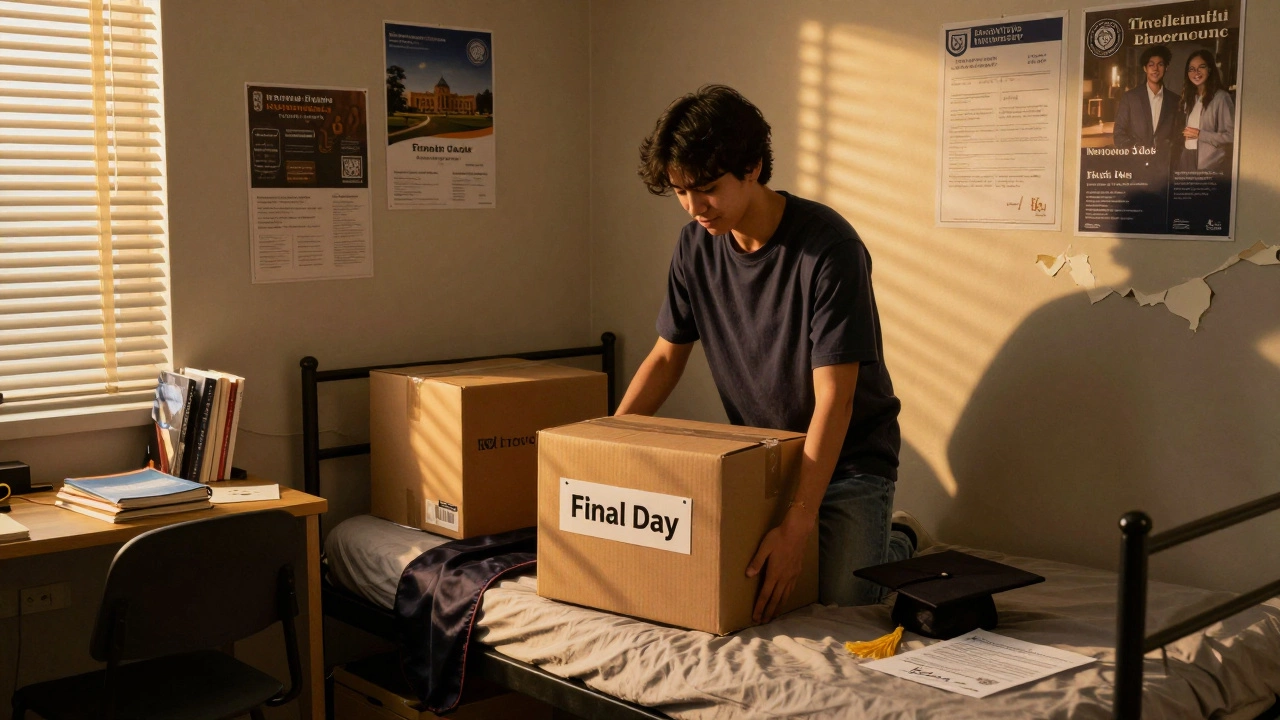
Student Accommodation Stay Calculator
Your Move-Out Date
Most students assume they can stay in student accommodation for the full length of their degree. But that’s not always true. The truth? Your stay is tied to your enrollment, your contract, and sometimes even your grades. If you’re planning to live in student housing for more than a year, you need to know the real rules - not the brochures.
Typical Stay Lengths Based on Contract Type
Student accommodation isn’t one-size-fits-all. Most universities offer two main types: academic year contracts and 12-month contracts.
Academic year contracts run from late August or early September through May or June. That’s about 9 to 10 months. These are the most common. They’re designed around the university calendar - you move in before orientation, and you’re expected to move out before finals end. If you stay past June, you’re usually charged extra or asked to leave.
Some newer accommodations, especially private providers like Unilife or Student Roost, offer 12-month leases. These are great if you plan to stay over summer - maybe doing an internship, retaking a course, or working part-time. But even then, you’re not guaranteed to stay beyond your course end date.
Here’s the catch: your contract ends when your enrollment ends. If you graduate in December, your tenancy ends in December. If you’re taking a gap year or deferring, your contract won’t automatically extend. You have to reapply.
What Happens After You Graduate?
Graduation day isn’t just a ceremony - it’s a move-out deadline. Most student accommodations have a strict policy: you must vacate within 7 to 14 days after your official graduation date. This isn’t a suggestion. It’s enforced by security, lock changes, and sometimes even utility cutoffs.
Why? Because these places are meant for current students. Once you’re no longer enrolled, you’re no longer eligible. Even if you’ve paid rent in advance, your contract becomes void once your student status ends. Universities and private operators don’t want non-students living in spaces reserved for those on academic rolls.
There are exceptions. A few universities offer short-term extensions for students continuing into postgraduate study - but only if you’ve already been accepted into the next program. If you’re waiting for a decision on your Master’s application, don’t assume you can stay. Ask your accommodation office in writing. Get it confirmed. Don’t rely on verbal promises.
Can You Stay Over Summer?
Summer is the biggest gray area. Most academic-year contracts end in May or June. If you’re not going home, you might think you can just keep living there. But unless you’ve signed a summer extension, you’re on borrowed time.
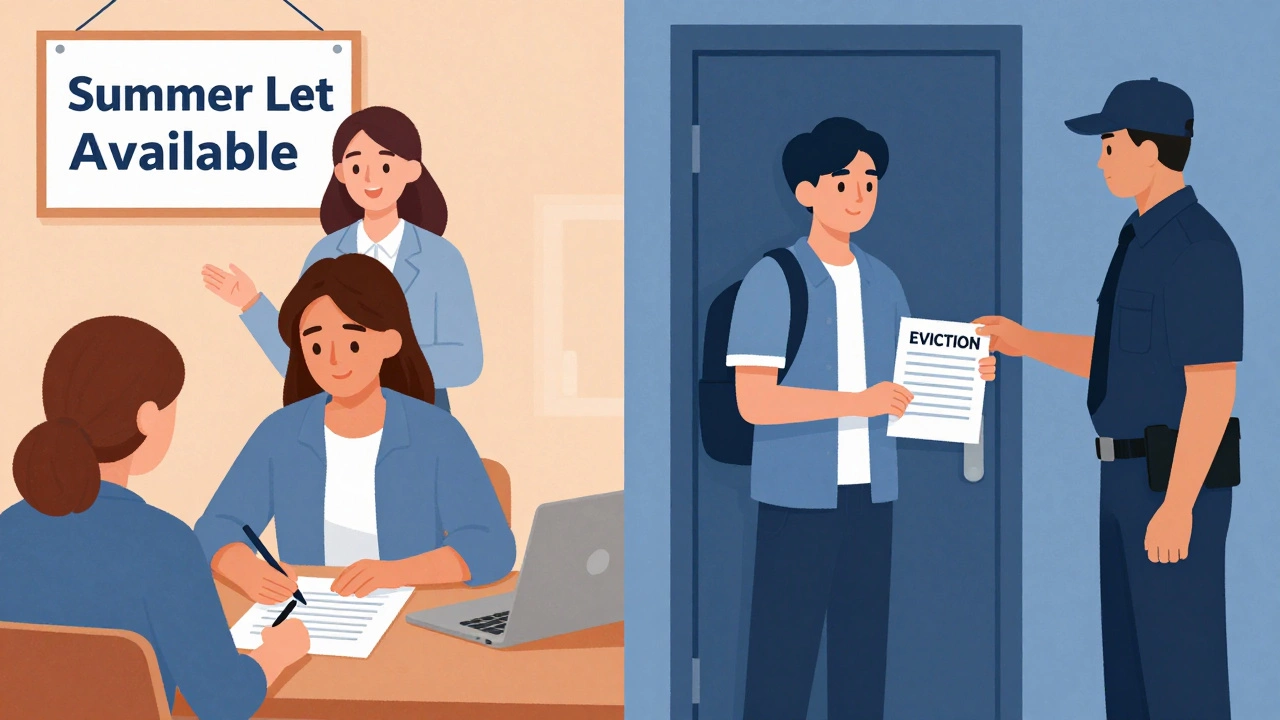
Some campuses offer summer lets. These are usually advertised in March or April. You apply separately. Rates are higher - often 20% to 40% more than term-time rent. You’ll also need to pay a deposit again. And if you’re an international student, you might need proof of visa validity to qualify.
Private providers are more flexible. Places like Unite Students or iQ Student Accommodation often have summer packages. But again, you need to book early. Spots fill up fast, especially in cities like Auckland, Wellington, or Christchurch where summer internships and research programs are common.
What If You Repeat a Year or Take a Break?
If you’re repeating a year due to failing a course, or you’ve taken a leave of absence, your accommodation rights change.
Universities usually require you to reapply for housing each academic year. If you’re repeating Year 1, you might get your old room back - if it’s still available and you reapply on time. But you won’t get priority over new students. Some schools even have policies that limit repeat students to one year of accommodation.
For students on a break - say, taking a semester off for health or family reasons - your accommodation is typically suspended. You won’t be charged, but you also won’t be allowed to stay. Return in the next semester? You’ll need to reapply. No guarantees.
What Happens If You Overstay?
Overstaying isn’t just a breach of contract - it’s a legal issue. Most student accommodation agreements include clauses that allow the provider to remove you without notice if you’re no longer eligible. That means your belongings could be packed up, stored, and held for a fee - or even thrown out.
In Auckland, some student complexes have partnered with local councils to enforce occupancy rules. If you’re caught living there without valid student status, you could face fines or even be reported to Immigration New Zealand if you’re on a student visa. Your visa conditions require you to maintain full-time enrollment. Living in student housing without being enrolled can trigger a compliance check.
Even if you’re not on a visa, landlords can take legal action. They’ve sued students for unpaid rent after they overstayed, claiming the tenancy became a month-to-month arrangement with no legal protection. You lose all rights once your contract expires.
Alternatives When Your Student Housing Ends
So what do you do when your student accommodation ends? You have options - but you need to plan ahead.
- Private rentals: Look for flats near campus. Many landlords accept students without requiring guarantors if you have a steady income or scholarship. Websites like Trade Me Homes and Flatmates.co.nz list student-friendly options.
- Shared houses: These are cheaper and more flexible. You can often find roommates who are also recent grads. Some houses even offer 6-month leases.
- University-affiliated housing: A few universities have postgraduate housing blocks. These are limited, but they’re designed for students continuing into higher degrees.
- Short-term rentals: Airbnb or Stayz can work for a month or two while you search. Just don’t rely on them long-term - they’re expensive and unstable.
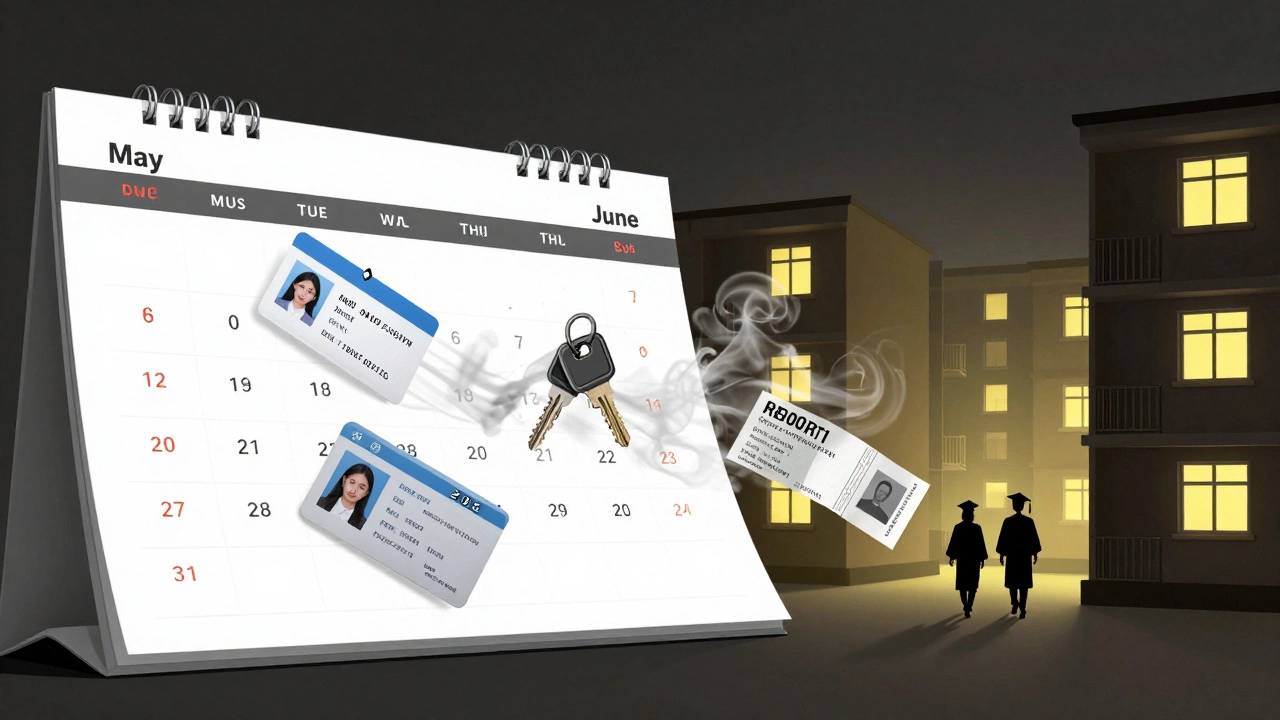
Start looking at least 6 to 8 weeks before your lease ends. Student housing vacancies spike in May and November. Landlords know students are moving out. Prices go up. Rooms disappear fast.
Key Rules to Remember
Here’s what you need to write down and keep handy:
- Your accommodation ends when your enrollment ends - not when you feel ready to leave.
- Summer stays aren’t automatic. You must apply and pay extra.
- Graduates have 7-14 days to move out. No exceptions unless you’re starting another degree immediately.
- Repeat students don’t get priority. Reapply early.
- Overstaying risks fines, legal action, and loss of belongings.
- Always get any extension in writing - email is fine, but never trust a chat message.
Student accommodation is a privilege, not a right. It’s designed to support your studies - not become your lifelong home. Plan ahead, read your contract, and know your deadlines. The last thing you want is to be locked out with your stuff still inside.
Can I stay in student accommodation after I graduate?
No, you cannot stay in student accommodation after you graduate unless you’re immediately enrolling in another degree program. Most providers require you to move out within 7 to 14 days of your official graduation date. Staying longer violates your contract and can lead to eviction, fines, or even visa issues if you’re an international student.
Do I have to leave during summer break?
It depends on your contract. Most student accommodations end in May or June, and you’re expected to leave. However, many providers offer summer lets for an extra fee. You must apply separately - summer stays aren’t automatic. If you don’t apply, your room will be given to someone else.
Can I renew my student accommodation for another year?
Yes, if you’re continuing your studies. But you must reapply. Renewal isn’t guaranteed. Priority goes to new students, especially international ones. Apply as soon as the renewal window opens - usually in November or December for the next academic year.
What if I’m repeating a year? Can I keep my room?
You can apply to stay, but you won’t get priority. Your room might be given to a new student. You’ll need to reapply through the housing office and may be offered a different room or building. Some universities limit repeat students to one year of accommodation.
What happens if I don’t move out on time?
If you overstay, your access will be cut off. Security may change your lock, and your belongings could be moved to storage - often at your expense. In serious cases, you could be fined or reported to authorities. Your contract ends on your graduation or withdrawal date - no grace period.
Corbin Fairweather
I am an expert in real estate focusing on property sales and rentals. I enjoy writing about the latest trends in the real estate market and sharing insights on how to make successful property investments. My passion lies in helping clients find their dream homes and navigating the complexities of real estate transactions. In my free time, I enjoy hiking and capturing the beauty of landscapes through photography.
view all postsWrite a comment