
When you buy a share in a shared ownership home, you might think you’re buying a piece of the house-like owning a slice of a pie. But here’s the catch: owning shares doesn’t make you a full owner in the way most people understand ownership. It’s not like buying a house outright. You’re not free to sell it anytime you want, make major renovations without permission, or keep all the equity you build. And that confusion? It’s why so many people end up frustrated-or worse, stuck.
What You Actually Own When You Buy a Share
Shared ownership schemes, common in the UK and parts of the US, let you buy a portion of a home-usually between 25% and 75%-while paying rent on the rest to a housing association or public body. If you buy 50% of a £300,000 home, you pay a mortgage on £150,000 and rent on the other £150,000. That rent? It’s typically around 2.75% of the unsold share’s value per year. So for that £150,000 slice, you’d pay about £3,250 a year in rent.
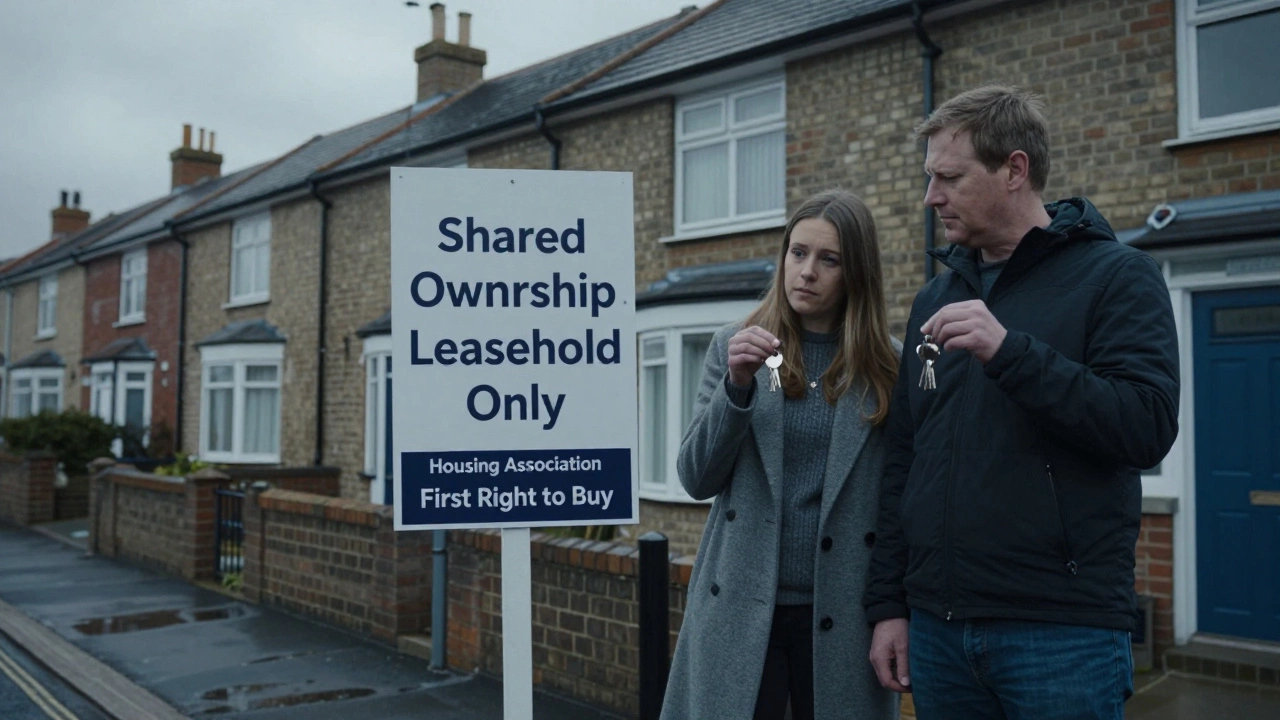
You hold a lease, not a freehold. That means you don’t own the land. You don’t own the building structure. You own the right to live there for a fixed term-usually 99 or 125 years. And you’re bound by rules set by the housing association: no pets without approval, no subletting, no knocking down walls without written consent. You’re not a homeowner in the traditional sense. You’re a leaseholder with a mortgage.
Why People Think They’re Full Owners
Marketing makes it sound simple: “Buy your first home with just a 5% deposit.” That’s true-but it’s incomplete. Sales brochures show smiling families in bright kitchens, but rarely mention the rent payments, the staircasing fees, or the fact that you can’t sell to just anyone. The housing association has the first right to find a buyer, and they can reject your choice if they think the person won’t qualify.
Even when you buy more shares-called staircasing-you’re still not fully free. You might reach 100% ownership, but that doesn’t always mean you get a freehold. Many shared ownership properties remain leasehold even after full purchase. That means you still pay ground rent and service charges. And if the housing association didn’t convert the lease to freehold when you bought your final share? You’re still stuck with the same restrictions.
What Happens When You Want to Sell?
Let’s say you’ve saved up and want to move. You’ve owned your 50% share for five years. You think you can just list it on Rightmove. You can’t. You have to notify the housing association. They’ll value the property and give you a set period-usually eight weeks-to find a buyer who qualifies for shared ownership. If no one qualifies, they might buy your share themselves, often at a lower price than you hoped.
And here’s the kicker: you pay for everything. The valuation fee. The legal fees. The administration fee. Sometimes, you pay a commission to the housing association too. That’s not just a cost-it’s a barrier. Many people end up staying longer than they planned because selling feels too complicated or expensive.
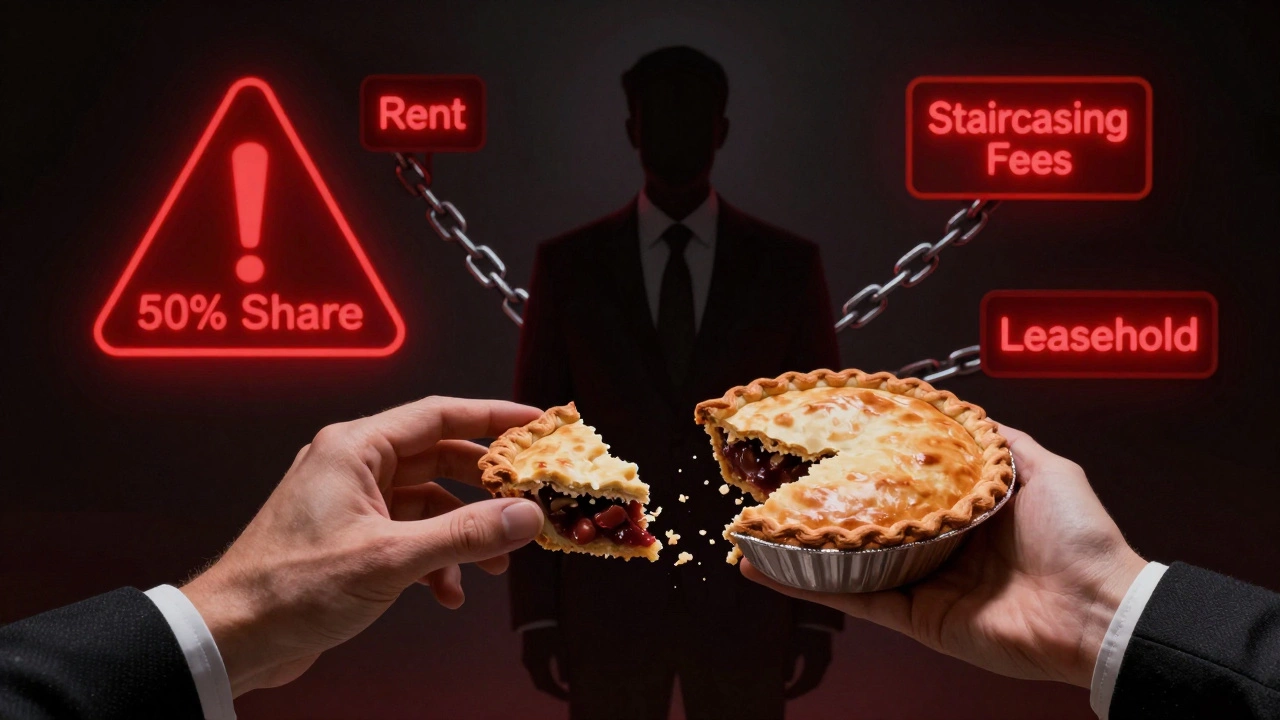
Equity Isn’t Always Yours to Keep
You might think: “I paid the mortgage on my 50% share. That equity is mine.” But what if the market drops? The housing association doesn’t share the loss. If your home falls from £300,000 to £250,000, you still owe the same mortgage amount on your share. Meanwhile, the housing association’s share also drops-but they don’t ask you to pay more rent to make up the difference. You absorb the loss on your portion. They don’t.
And if the market rises? You get to keep the gain on your share. But only if you’ve bought more shares. If you’re still at 50%, you only benefit from half the increase. That’s fair, right? Maybe. But what if you’ve been paying rent on the other half for years? You’ve been paying for the right to live there, not building equity in it. That’s not ownership. That’s renting with a mortgage.
Who Really Benefits From Shared Ownership?
Shared ownership works best for people who can’t afford a deposit on a full home but have stable, long-term income. Teachers, nurses, firefighters-people who want to build a life in a city where prices are sky-high. It’s not a get-rich-quick scheme. It’s not a stepping stone to full ownership for everyone.
Studies from the UK’s National Housing Federation show that only about 30% of shared ownership buyers ever staircase to 100%. The rest stay in their initial share, often because they can’t afford the costs of buying more, or because they’re not sure they’ll stay long enough to make it worth it. For many, it’s a long-term rental with a mortgage attached.
And if you’re a first-time buyer with irregular income-freelancers, gig workers, or those with bonuses that aren’t guaranteed? You might get turned down for staircasing. Lenders want steady income. If your pay fluctuates, you might never be able to buy the rest.
What Full Ownership Looks Like (And Why It’s Different)
Compare this to buying a freehold home. You own the land. You own the structure. You can sell it anytime. You can rent it out. You can renovate without asking permission. You pay no rent. You pay property taxes, yes-but no monthly rent to a third party. You don’t need approval to install solar panels or extend the kitchen.
Shared ownership gives you access to homeownership. But it doesn’t give you control. It doesn’t give you freedom. It gives you a foot in the door-and then locks the door behind you with rules, fees, and restrictions.
Is It Worth It?
Is shared ownership a good idea? It depends on your goal.
- If you want to live in a home you can’t otherwise afford, and you plan to stay for 10+ years-it’s worth considering.
- If you want to build wealth quickly or move often-it’s not.
- If you want to fix up a house, rent it out, or flip it-don’t even look at shared ownership.
Many people enter shared ownership hoping to escape renting. They do. But they trade one kind of restriction for another. You’re no longer paying rent to a private landlord. You’re paying rent to a housing association-with less flexibility, more paperwork, and slower paths to real ownership.
What to Do Before You Sign
Before you commit, ask these questions:
- What percentage of the home am I buying? (25%? 50%? 75%?)
- How much rent will I pay on the rest? (Calculate it: 2.75% of the unsold share’s value per year.)
- Can I staircase? And if so, how much does each step cost? (Legal fees, valuation fees, admin fees can add £2,000-£5,000 per step.)
- Will I ever own the freehold? (Most won’t. Ask for the lease terms in writing.)
- What happens if I can’t afford to staircase? Do I get locked in?
- Who sets the rent increases? (Usually tied to inflation or a fixed percentage. Ask for the last 5 years’ increases.)
Get a solicitor who knows shared ownership. Most general property lawyers don’t. Ask them to explain the lease, the staircasing process, and the exit strategy before you sign anything.
The Bottom Line
Owning shares in a shared ownership home doesn’t make you an owner. It makes you a part-owner with rules. You have some of the benefits of homeownership-like building equity and having a fixed mortgage-but none of the freedom. You’re not buying a house. You’re buying a long-term rental with a mortgage attached.
If you’re okay with that-if you want to live somewhere you couldn’t otherwise afford, and you’re ready to play by someone else’s rules-then shared ownership can work. But don’t fool yourself. You’re not an owner. You’re a leaseholder with a mortgage. And that’s not a bad thing. It’s just not the same thing.
Does owning shares in a shared ownership home mean I own the property?
No. Owning shares means you own a percentage of the home’s value, but you don’t own the land or the building structure. You hold a lease, not a freehold. You must follow rules set by the housing association, pay rent on the portion you don’t own, and can’t sell without their approval.
Can I eventually become a full owner through shared ownership?
Yes, through a process called staircasing, where you buy additional shares over time. But even at 100% ownership, you may still be on a leasehold, meaning you’ll pay ground rent and service charges. Full ownership in the traditional sense-freehold-is rare in shared ownership schemes.
What happens if I can’t afford to buy more shares?
You can stay in your current share indefinitely. You’re not forced to staircase. But you won’t benefit from future property value increases beyond your initial share. You’ll continue paying rent on the rest, and your ability to sell may be limited by housing association rules.
Are there hidden costs in shared ownership?
Yes. Every time you staircase, you’ll pay for a valuation, legal fees, and administrative charges-often £2,000-£5,000 per step. You’ll also pay monthly rent on the unsold share, service charges, and possibly ground rent. These add up and can make staircasing more expensive than expected.
Can I rent out my shared ownership home?
Almost always, no. Most shared ownership leases prohibit subletting. The scheme is designed for owner-occupiers, not landlords. Violating this can lead to legal action or forced sale by the housing association.
How does shared ownership compare to renting privately?
Shared ownership often costs more than private renting because you pay both mortgage and rent. But you build equity over time, unlike private renting where your payments go to the landlord. It’s a trade-off: higher monthly costs for potential ownership, versus lower costs with no long-term gain.
Corbin Fairweather
I am an expert in real estate focusing on property sales and rentals. I enjoy writing about the latest trends in the real estate market and sharing insights on how to make successful property investments. My passion lies in helping clients find their dream homes and navigating the complexities of real estate transactions. In my free time, I enjoy hiking and capturing the beauty of landscapes through photography.
view all postsWrite a comment