
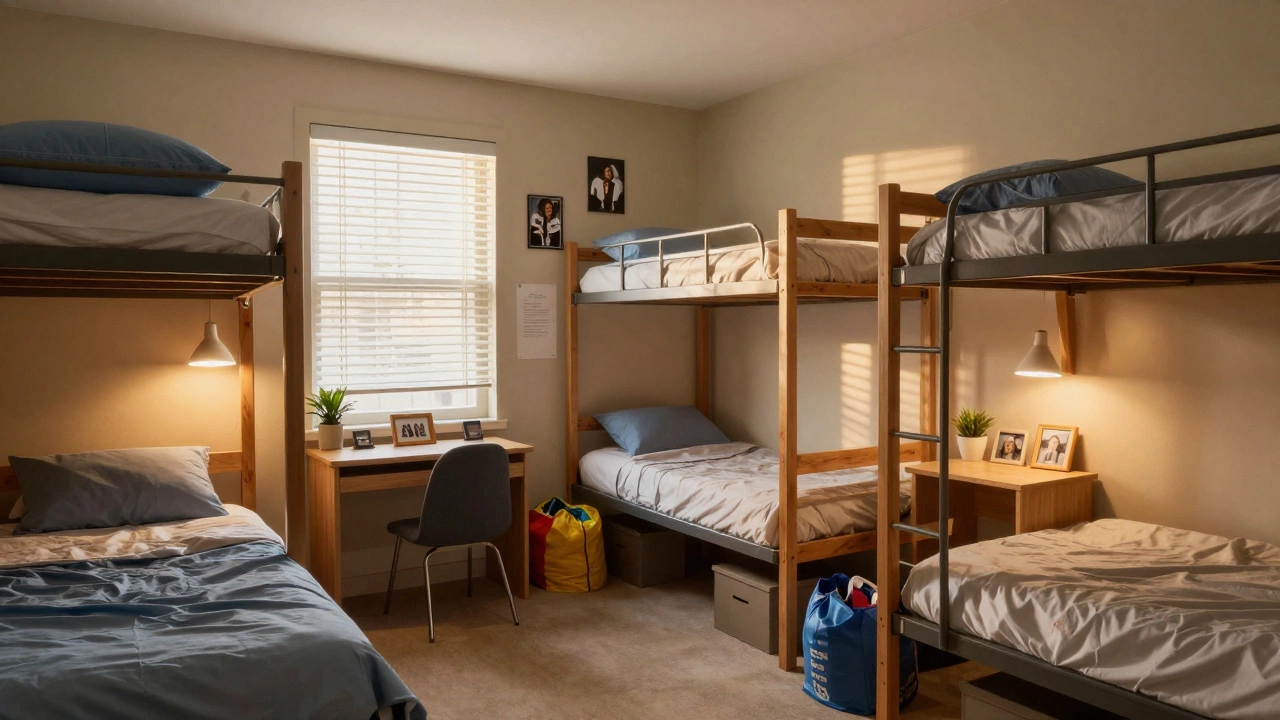
Student Housing Budget Calculator
🏠 Housing Configuration
Estimated Costs
Monthly
Annual
Move-In Upfront Costs
-
Deposit + 1st Month:
$0
-
Est. Utilities Deposit:
$0
Total Upfront:
$0
- Deposit + 1st Month: $0
- Est. Utilities Deposit: $0
When you search for student accommodation in the United States, the numbers can shock you just as much as the campus tours excite you. As we head deeper into 2026, understanding exactly where your money goes is the difference between surviving your semester and thriving through it. You might have heard estimates ranging from a few hundred dollars to over two thousand per month, but those figures are too broad to actually plan with. The reality depends heavily on whether you sleep in a dormitory, rent an apartment, or stay with family. Let's break down the actual costs you will face in the 2025-2026 rental market so you can build a budget that works.
Understanding On-Campus Housing Costs
The most straightforward option for many freshmen is living directly on university property. This type of housing is designed specifically for undergraduate students who need convenience above all else. Universities manage these buildings, meaning they handle maintenance, security, and often include utilities in a single bill.
University Dormitory is on-campus residential housing managed by the institution that typically includes bed, desk, and common room access. Also known as College Dorms, these facilities usually charge by the semester rather than monthly. For the 2025-2026 school year, expect standard double rooms to range between $10,000 and $14,000 per year in mid-sized college towns. In major hubs like New York City or Boston, those prices climb significantly higher, often exceeding $16,000 annually for basic occupancy. While the sticker price looks high compared to some apartments, you save on moving furniture and setting up utilities since everything comes ready.
Beyond the room rate, you almost always encounter mandatory meal plans. These are contracts that require you to spend a certain amount of credit points at dining halls throughout the term. A standard full-plan package typically adds another $3,000 to $5,000 to your annual budget. If you cook often, a partial plan makes sense, but dorm life usually encourages using the cafeteria for quick meals between classes.
- Double occupancy private room: $1,200 to $1,500 per month.
- Single occupancy suite: $1,500 to $2,200 per month.
- Utility inclusion: Water, heat, and Wi-Fi are covered.
- Contract length: Usually locked for 9 months or the full academic year.
Living here simplifies logistics. You get immediate access to campus transit passes and library hours without commuting. However, the noise levels and lack of kitchen access in traditional residence halls mean you sacrifice privacy and cooking freedom for convenience.
Exploring Off-Campus Apartment Rentals
Once you step out of the dorms, usually after your sophomore year, you enter the open market. This is where things get complicated because you control the variables, but you also accept the risks. Rents fluctuate based on proximity to campus, seasonality, and local demand. Many students prefer this route to gain independence and potentially lower costs by sharing spaces.
A standard Apartment Rentalresidential unit rented privately from a landlord or property management company offers different structures. Instead of paying a flat fee to the school, you sign a commercial lease with a property owner. In 2026, average rents for a one-bedroom apartment near top-tier universities hover around $1,400 to $1,800 per month in expensive markets. In more affordable areas like the Midwest or parts of the South, you might find similar quality space for $900 to $1,100.
| Region Type | Typical Monthly Rent (Studio/1BR) | Total Annual Estimate |
|---|---|---|
| Coastal Metropolis (NYC, SF) | $2,000 - $2,800 | $24,000 - $33,600 |
| Northeast Suburbs | $1,400 - $1,800 | $16,800 - $21,600 |
| Midwest College Town | $900 - $1,200 | $10,800 - $14,400 |
| South/West Emerging Hubs | $1,100 - $1,500 | $13,200 - $18,000 |
Sharing an apartment changes the math entirely. If four people share a two-bedroom apartment, your personal contribution drops drastically. However, you must account for the initial upfront costs that schools absorb but landlords do not. When signing a lease outside the university system, expect to pay the first month plus a security deposit before moving in. This lump sum can easily reach $3,000 to $4,000 depending on the area.
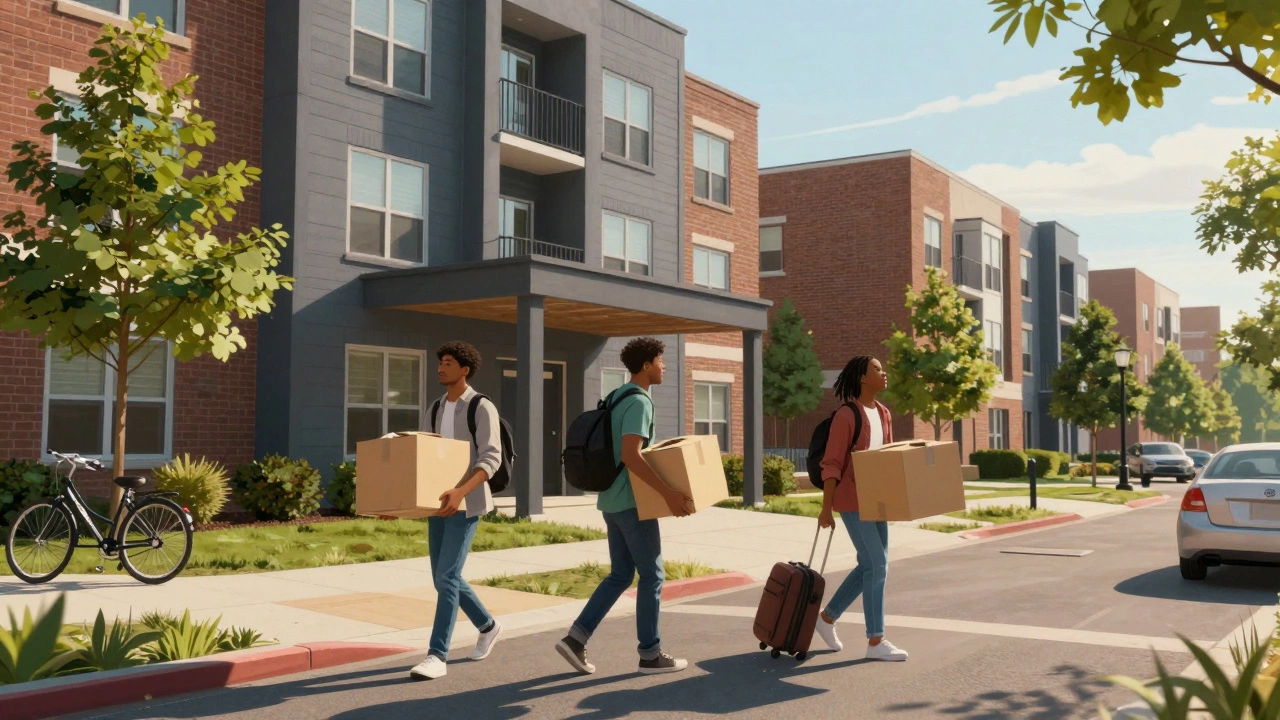
Regional Price Variance Across the Country
You cannot apply a single number to "American housing." The cost of living index varies wildly between states. A student in Madison, Wisconsin, faces a vastly different economic reality than someone attending UC Berkeley or Columbia University. Location dictates not just rent, but grocery prices and transportation fees.
In high-density coastal cities, supply cannot meet demand during the move-in seasons of August and January. Landlords raise prices knowing students have limited options. Conversely, state flagship universities in rural areas often subsidize costs or sit in towns where landlords keep rents competitive to capture student volume. For instance, in Texas, despite population growth, rents remain relatively accessible due to high housing inventory.
If you attend a commuter school, consider living further out. Being ten miles away might save you $400 monthly, but you must add fuel costs to the equation. Public transport availability plays a huge role here. Some cities offer free bus passes for students enrolled nearby, while others charge full fare regardless of status.
- New York/California: Expect premium pricing; aim for shared flats.
- Texas/Florida: Moderate pricing; larger availability of furnished suites.
- Midwest/Rural: Lowest costs; potential for subletting opportunities.
Hidden Expenses Beyond Base Rent
Rent is rarely the total cost of shelter. Many students underestimate secondary bills until the first invoice arrives. When renting off-campus, utilities become your responsibility unless the listing explicitly states "all-inclusive." Electricity spikes in summer (AC) and winter (heating), driving up monthly averages unexpectedly.
Utility Bills are monthly charges for essential services including electricity, water, gas, and trash removal required to maintain a habitable living space.
In 2026, energy costs have stabilized after volatile years, but they still represent a significant chunk of a budget. Allocate roughly $100 to $150 monthly for electric and internet combined. High-speed internet is non-negotiable for coursework; most providers now offer student packages ranging from $50 to $80 per month. Do not forget renters insurance. While optional in some jurisdictions, it is wise protection against theft or fire damage. Policies are cheap, often costing less than $15 a month, covering thousands of dollars of personal belongings.
Another critical hidden cost is the security deposit. This money sits with the landlord until you vacate. If you leave stains on carpets or damage walls, deductions happen immediately. Always document the condition of the apartment upon move-in with timestamped photos. This small habit protects your cash when you move out later.

Strategies for Budgeting and Saving
Financial stress is real, but strategic planning mitigates it. Start by checking if your university offers housing assistance programs. Some financial aid packages can be used for off-campus rent verification. Additionally, look for listings specifically marketed toward students. Property managers catering to this demographic are more likely to allow flexible lease terms, such as six-month agreements instead of the standard twelve.
Finding a roommate is the single most effective way to cut costs. It cuts rent in half and splits utility bills equally. However, trust is crucial. Screen potential roommates thoroughly regarding their habits and financial reliability. Written room agreements prevent disputes over shared cleaning duties or unpaid bills. If you bring friends from home, ensure you verify everyone's visa status and employment eligibility if needed for lease signing.
Timing is everything. Applications in early spring for fall housing get priority. Waiting until July means you compete for leftovers at peak prices. Lock in leases before the rush begins to secure lower rates.
Frequently Asked Questions
Is student housing cheaper than regular apartments?
Not necessarily. Purpose-built student housing often charges a premium for convenience and included utilities. Shared private apartments can be cheaper, but you must account for setup costs and separate bills.
What are the upfront costs to rent off-campus?
You generally need to pay the first month's rent plus one security deposit, often equal to one month's rent. Moving companies and utility deposits may add another $500 to $1,000 initially.
Can international students rent without credit history?
It is difficult but possible. You may need a guarantor or proof of funds to cover the entire lease term upfront. Some student complexes accept alternative credit checks via university enrollment verification.
Do dorms include food costs?
Most dorms require a meal plan purchase which bundles food costs into the tuition or housing bill. You pay a fixed fee for unlimited access or point-based purchasing throughout the semester.
How does location affect student housing prices?
Proximity to campus drives prices. Living within walking distance commands a premium. Living 10 minutes away by public bus can reduce monthly rent by 30% to 40% depending on the city density.
Corbin Fairweather
I am an expert in real estate focusing on property sales and rentals. I enjoy writing about the latest trends in the real estate market and sharing insights on how to make successful property investments. My passion lies in helping clients find their dream homes and navigating the complexities of real estate transactions. In my free time, I enjoy hiking and capturing the beauty of landscapes through photography.
view all postsWrite a comment