
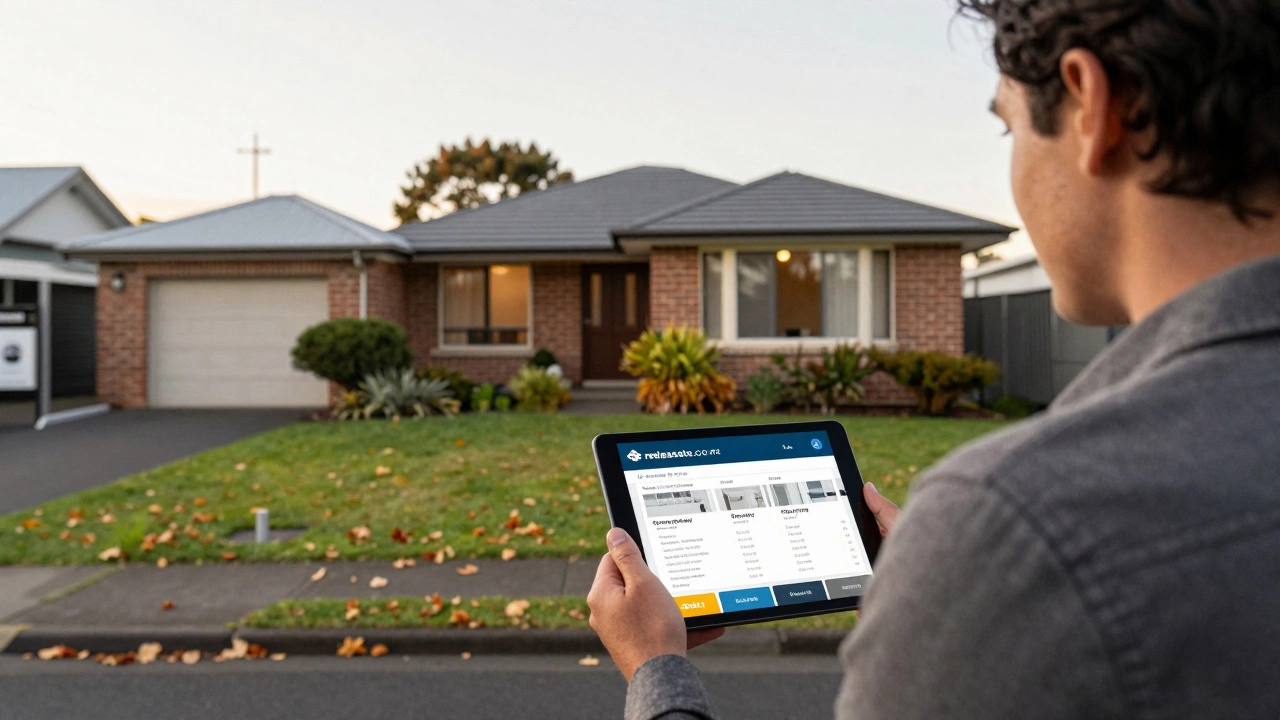
Property Value Estimator
This tool estimates your property's value based on recent comparable sales data in New Zealand. It uses the most reliable method: comparing your property to similar homes that have actually sold in the last 90 days.
Remember: The best valuations come from looking at real sale prices, not asking prices. Always check recent sales in your specific neighborhood for accuracy.
Adjust for features
Knowing how much a property is worth isn’t just about guessing what someone might pay. It’s about understanding what the market actually says - and that changes fast. In Auckland, a house that sold for $900,000 in early 2024 might be listed at $820,000 today, not because it’s worse, but because buyer demand dropped and interest rates stayed high. Property valuation isn’t magic. It’s data, location, and timing - all put together.
What drives a property’s value?
Not every feature adds value. A marble countertop might look nice, but if no one else in the neighborhood has one, it won’t bump up the price. What really moves the needle?
- Location: Proximity to schools, public transport, and shopping matters more than a big backyard. In Auckland, homes within 800 meters of a train station sell 17% faster than those farther away, according to Real Estate Institute of New Zealand data from 2025.
- Size and layout: Four bedrooms on a 500m² section is better than six bedrooms on a 300m² section if the extra rooms are cramped or poorly designed. Buyers care about usable space, not just square meters.
- Condition: A home with a new roof, updated plumbing, and modern wiring sells for more - even if it’s older. Buyers don’t want hidden costs.
- Market timing: Spring and early summer see the most activity. Listings in July or August often sit longer and sell for less, even if the house is identical to one sold in October.
These factors aren’t guesses. They’re tracked by agents, councils, and data platforms. The best valuations don’t come from a single number - they come from comparing your property to others that actually sold nearby.
Three ways to value a property
There are three main methods professionals use. You don’t need to be an expert to use them - just know what to look for.
1. Comparable sales (most reliable)
This is the gold standard. Look at homes that sold in the same street or nearby - within 500 meters - in the last 90 days. Don’t just check the listing price. Find the final sale price. That’s what matters.
For example, if three similar houses on your street sold for $780,000, $810,000, and $795,000, your property likely falls in that range. Adjust for differences: if your house has a garage and the others don’t, add $20,000-$30,000. If yours is 10 years older and needs a new kitchen, subtract $40,000.
Use realestate.co.nz or qv.co.nz to search sold properties. Filter by date, suburb, and property type. Ignore listings that haven’t sold - they’re just asking prices, not real values.
2. Online valuation tools (quick but rough)
Tools like Trade Me Property’s estimator or CoreLogic’s House Price Index give you a ballpark. They’re fast, but they’re not precise. These tools use algorithms that don’t always catch unique features - like a view, a heritage listing, or a noisy road.
In Auckland, these tools often overvalue homes in trendy suburbs like Ponsonby or St. Johns because they don’t account for oversupply. In 2024, CoreLogic’s automated valuations were, on average, 8% higher than actual sale prices in those areas.
Use these tools to get a starting point, not a final answer. If the tool says your house is worth $950,000 but three similar homes sold for $820,000, trust the sales data.
3. Professional appraisal (for certainty)
If you’re selling, refinancing, or disputing a council valuation, hire a certified valuer. They visit your home, take photos, measure rooms, check for damp or structural issues, and compare your property to at least five recent sales.
A professional appraisal costs between $300 and $600 in Auckland. It’s worth it if you need a legally recognized number. Banks require it for loans over $500,000. Local councils also use these reports for rating purposes.
Don’t rely on your real estate agent’s free “market appraisal.” They’re trying to get your listing. Their number is often inflated to win your business.

What makes a property hard to value?
Some homes don’t fit the mold. These are the tricky ones:
- Unique designs: Homes with unusual layouts, like a converted warehouse or a modernist glass box, have no direct comparables. Valuers have to estimate based on similar styles in other suburbs.
- Undeveloped land: A vacant section in Papakura might be worth $300,000. The same size in Remuera could be $800,000. Zoning, access, and infrastructure matter more than the size of the plot.
- Properties near noise or hazards: A house next to a motorway, a power station, or a landfill can lose 15-30% of its value. Valuers note these, but online tools often miss them.
- Over-improved homes: A $1.2 million home in a neighborhood where most houses sell for $700,000 won’t get its full cost back. Buyers won’t pay a premium for upgrades no one else has.
These properties need extra care. Don’t assume the rules for normal homes apply. Ask a local valuer or agent who’s sold in that exact area.
How to avoid overpaying or underpricing
Overpaying means you’re stuck with a house that won’t appreciate. Underpricing means you leave money on the table.
Here’s how to stay balanced:
- For buyers: Never make an offer without checking at least five recent sales in the same block. If the agent says, “This is a rare opportunity,” ask for the sales data. If they can’t show it, walk away.
- For sellers: Price based on what similar homes sold for, not what you paid. If you bought in 2020 for $750,000 and the market dropped, listing at $800,000 won’t help. You’ll sit on the market for months.
- For investors: Look at rental yield, not just price. A $600,000 home renting for $600/week gives you a 5.2% yield. A $800,000 home renting for $650/week gives you 3.9%. The cheaper one is often the better investment.
The biggest mistake people make? Treating property like a stock. You can’t buy low and sell high if you don’t know what low and high actually are.
What’s happening in Auckland right now?
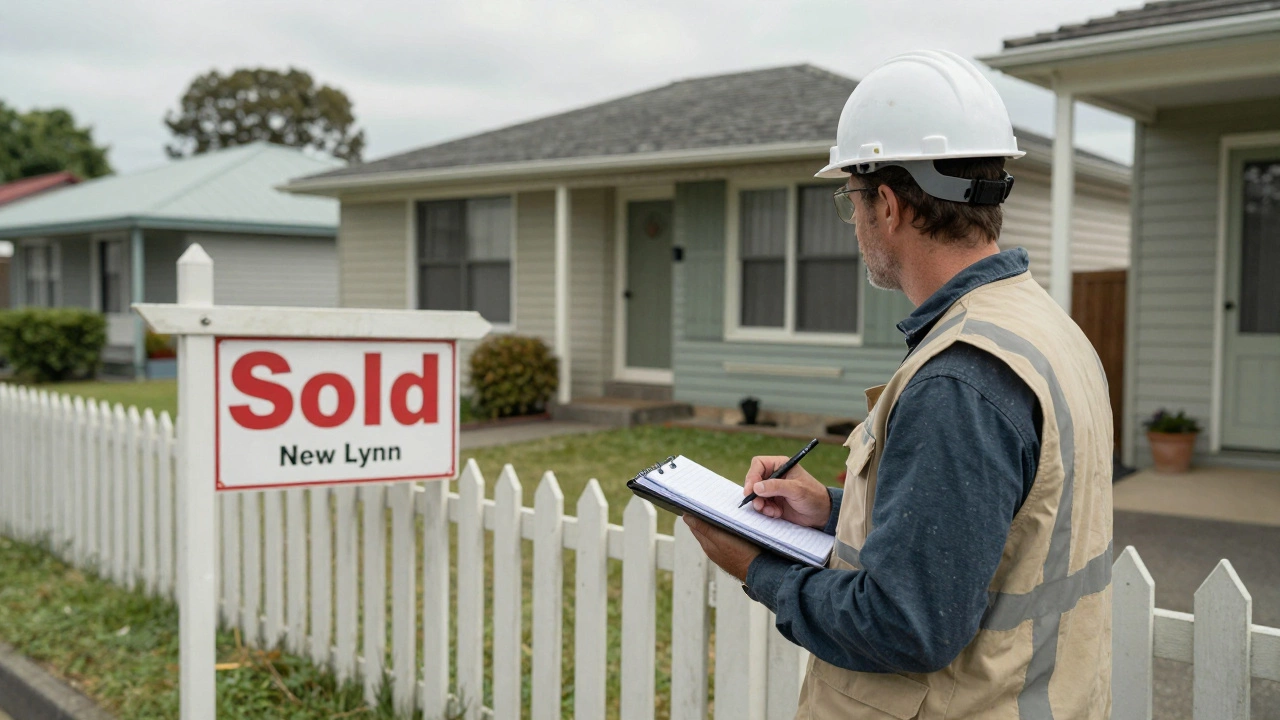
As of November 2025, Auckland’s median house price is $940,000 - down 12% from the 2021 peak. But prices aren’t falling everywhere. Suburbs with good schools and transport links - like Takapuna, New Lynn, and Mt. Roskill - are holding steady. Areas with poor infrastructure or lots of new builds - like Drury or Waiuku - are seeing bigger drops.
Supply is still low. There are 30% fewer homes for sale than in 2021. That means competition isn’t gone - it’s just quieter. If your property is in good condition and priced right, it will still sell. But if it’s overpriced or outdated, it’ll sit.
Interest rates are stabilizing around 7%. That’s changed buyer behavior. People aren’t bidding $200,000 over asking anymore. They’re making offers close to the asking price - if the house checks the boxes.
Final tip: Value isn’t fixed
A property’s value isn’t a number written in stone. It’s a conversation between what sellers want, what buyers are willing to pay, and what the market has shown recently. The best way to find it? Look at what similar homes have sold for - not what they’re listed for. Talk to agents who’ve sold in your street. Check the data. Don’t let emotion or hype drive your decision.
Property value isn’t about what you think it’s worth. It’s about what someone else will pay for it tomorrow.
Can I trust online property valuation tools?
Online tools give you a rough idea, but they’re not accurate enough for serious decisions. They use broad data and can’t see unique features like views, noise, or structural issues. In Auckland, these tools often overvalue homes in trendy areas by 5-10%. Use them to get a starting point, but always verify with recent sales data.
Why is my property worth less than my neighbor’s?
Even small differences matter. A 20-year-old roof vs. a 5-year-old one, a driveway that’s cracked vs. paved, or even the direction the house faces can change the value. If your house needs a new kitchen or has a smaller section, that adds up. Check the actual sale prices of homes with similar features - not just the ones that look the same.
Do renovations increase property value?
Some do, some don’t. A new kitchen or bathroom can add 5-10% if it matches the neighborhood standard. But luxury upgrades - like a wine cellar or smart home system - rarely pay back their cost. Focus on fixing what’s broken: leaking roofs, old plumbing, damp walls. Buyers pay for safety and function, not features.
How often should I get my property valued?
If you’re not selling or refinancing, you don’t need a formal valuation. But check sold prices in your area every 6-12 months. Market conditions change fast. In Auckland, prices can shift 5-8% in a year. Stay informed so you’re not caught off guard.
What’s the difference between a valuation and a market appraisal?
A market appraisal is a free estimate from a real estate agent, often inflated to win your listing. A formal valuation is done by a certified professional who’s independent and legally responsible for accuracy. Banks and councils require formal valuations. For selling, use both: get the agent’s opinion, then confirm it with recent sales data.
Corbin Fairweather
I am an expert in real estate focusing on property sales and rentals. I enjoy writing about the latest trends in the real estate market and sharing insights on how to make successful property investments. My passion lies in helping clients find their dream homes and navigating the complexities of real estate transactions. In my free time, I enjoy hiking and capturing the beauty of landscapes through photography.
view all postsWrite a comment