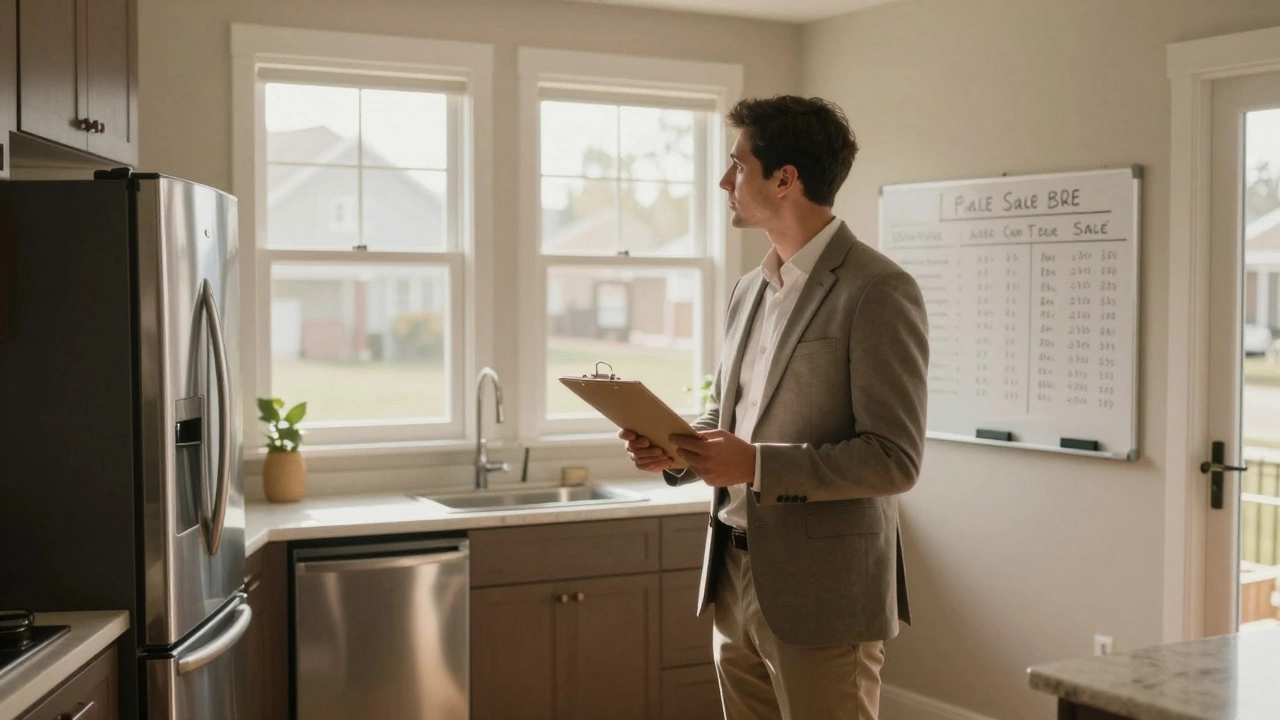
When you hear real estate appraisal, a professional estimate of a property’s market value based on condition, location, and recent sales of similar homes. Also known as home valuation, it’s the quiet engine behind every mortgage, sale, and refinance. It’s not guesswork. It’s not a Zillow estimate. It’s a licensed expert walking through your kitchen, measuring your backyard, and comparing your house to three others that sold down the street last month.
That home valuation, the estimated price a property would sell for in a fair market doesn’t come from an algorithm alone. Lenders rely on it to decide how much they’ll loan you. Sellers use it to set a price that won’t sit for months. Buyers need it to know they’re not overpaying. And if you’re in a shared ownership, a system where you buy a portion of a home and pay rent on the rest, common in the UK arrangement, your appraisal determines how much it costs to buy more shares—called staircasing. A wrong number here can cost you thousands.
What drives that number? Location matters more than square footage. A 1,200-square-foot home in a good school district will outvalue a 1,800-square-foot home in a noisy area. Condition counts—new roof? Fresh paint? Updated plumbing? These show up in the report. Recent sales of similar homes (called comparables or comps) are the backbone. If three homes like yours sold for $280k, $290k, and $285k, your appraisal lands near that range. Not above it. Not below it. Right there.
And here’s the thing no one tells you: appraisals aren’t about what you spent on renovations. They’re about what buyers are willing to pay. A $50k kitchen remodel might not add $50k to your appraisal if the neighborhood doesn’t support it. Same goes for unique features—like a custom pool or a giant garden. They might mean something to you, but not to the market.
If you’re selling, knowing how the appraisal works helps you prepare. Clean up clutter. Fix leaky faucets. Make sure the appraiser can see the home’s potential. If you’re buying, don’t panic if the appraisal comes in low. It’s not the end—it’s a negotiation point. You can challenge it, get a second opinion, or ask the seller to lower the price.
And if you’re using a home value estimator, an online tool that gives a rough price based on public data, remember—it’s a starting point. These tools don’t see your cracked driveway or your brand-new windows. They see tax records and zip codes. They’re useful for a ballpark, but never for a final decision.
The posts below cover real situations where appraisal shapes decisions: how much you can borrow with a 650 credit score, why a $2 million home needs more than just a good score, how shared ownership shares are calculated, and what happens when your home’s value doesn’t match your expectations. These aren’t theory pieces. They’re real-world guides from people who’ve been there—buyers, sellers, and investors who learned the hard way that value isn’t what you think it is. It’s what the market says it is.